


When your drains stop flowing, the clock starts ticking. Whether you’re a homeowner watching water pool around your feet in the shower or a restaurant manager dealing with a backed-up kitchen line, understanding how professional drain cleaning works puts you in a stronger position to make smart, cost-effective decisions. This guide covers everything from warning signs and equipment to realistic pricing and preventive strategies-plus how service businesses can turn this knowledge into content that actually converts.
Key Takeaways
- Professional drain cleaning goes far beyond store-bought chemicals. It becomes essential when multiple drains back up simultaneously, the main sewer line is involved, or sewage appears at a sewer cleanout. These situations demand specialized equipment and trained technicians, not a bottle from the hardware store.
- Reputable drain cleaning services rely on camera inspection, hydro jetting, and proper access points like a sewer cleanout to diagnose and solve the root cause of problems-whether that’s tree roots, grease, structural damage, or a failing sewer line.
- Ultra-low advertised rates (the “$99 special” variety) often exclude main line work, hydro jetting, and camera inspections. Homeowners should always ask exactly what’s included before scheduling an appointment online or by phone.
- Both residential and commercial drain cleaning follow the same core process-inspection, clearing, and prevention-but restaurants, apartments, and other businesses face higher usage demands and stricter health codes, requiring more frequent scheduled maintenance.
- This article is written from Digital Vibes Agency’s marketing perspective, designed to help local service businesses turn their drain cleaning expertise into high-converting, SEO-friendly content that drives real calls and bookings.
What Professional Drain Cleaning Actually Involves
Professional drain cleaning services mean full-pipe cleaning and diagnosis of the entire drain system-not just poking a hole through a clog. There’s an important distinction here: drain clearing punctures a hole in the clog to restore temporary flow, while drain cleaning removes all blockage from the pipeline. Many reputable companies guarantee drain cleaning results for six months because the pipe is genuinely restored to full capacity.
Here’s what a typical residential call looks like when a professional plumber arrives:
- Initial assessment – The technician asks which fixtures are affected, when problems started, and whether more than one drain is involved.
- Multi-fixture check – They test toilets, sinks, tubs, and floor drains to determine whether the issue is localized or system-wide.
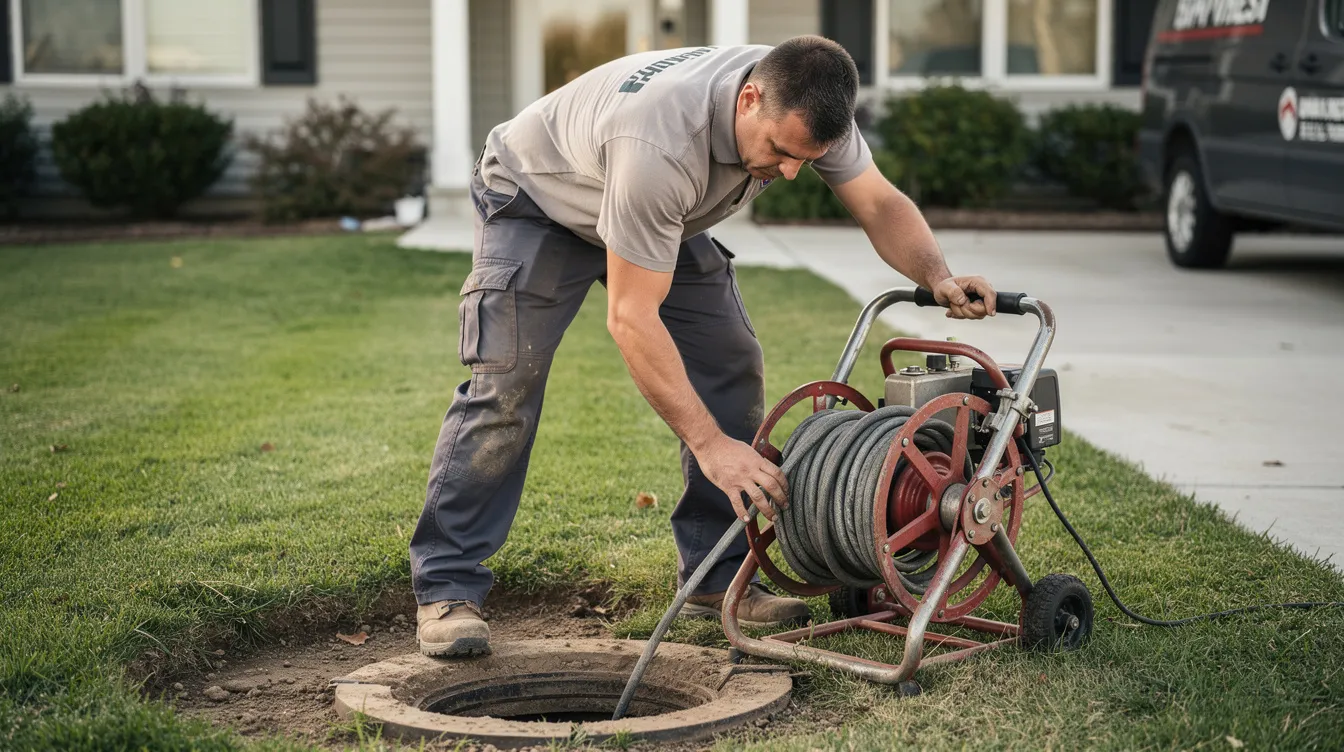
- Locating access points – The technician finds the sewer cleanout and any other access points to plan equipment entry.
- Running equipment – Depending on the diagnosis, they deploy cable machines, hydro jetting rigs, or push cameras.
- Final testing – After the work begins and the line is cleared, every affected fixture gets tested to confirm full flow is restored.
The difference between clearing one slow sink and dealing with a blocked main drain that affects toilets, tubs, floor drains, and lower-level fixtures is enormous. One is a 20-minute job. The other can involve hours of diagnostic and mechanical work.
Licensed, insured professionals bring specialized equipment-drain machines, pipe locators, cameras, and hydro jetting rigs-that are simply unavailable to homeowners. Chemical cleaners often do not fully remove blockages, and DIY attempts risk pipe damage or personal injury.
Service businesses can showcase this step-by-step process on their website with photos and short explainer videos. It builds trust, demonstrates expertise, and directly improves conversions.
Types of Drain Cleaning Services (Small Drains vs. Main Line)
Drain service breaks into two broad categories: “small drain” work on individual fixtures and “main line” work that addresses the entire property’s drainage system. Effective drain cleaning methods vary based on the type of clog and location, so accurate diagnosis matters before any equipment gets deployed.
Small Drain Cleaning
Small drain cleaning covers individual fixtures-a sink, tub, or shower with localized buildup. Typical tools include hand snakes and light-duty cable machines. Common issues at this level are hair, soap scum, food particles, and minor grease accumulation. When only one fixture is slow and the rest of the house drains normally, a single-fixture drain service is usually all you need.
Main Sewer Line Cleaning
When the problem affects drain lines throughout the property, the blockage is likely in the main sewer line. This requires longer cables, larger cutting heads, or hydro jetting to clear obstructions causing backups in multiple drains at once. Main line cleaning addresses multiple drains backing up and usually costs significantly more than a single-fixture call.
Branch Lines
Branch lines collect wastewater from groups of fixtures-like a bathroom with a toilet, sink, and shower. A clog here can mimic main line problems because several fixtures back up simultaneously. Without careful diagnosis, a technician might treat the wrong section entirely.
Cleanout Access
The sewer cleanout serves as the primary access point for main line drain cleaning. It allows technicians to insert equipment directly into the main pipe rather than pulling toilets or climbing onto the roof to access vent stacks-both of which add time, cost, and mess to the job.
Specialized Equipment: Snaking, Hydro Jetting, and Camera Inspection
Professional drain cleaning services rely on a combination of mechanical and diagnostic tools to clear and inspect drain lines fully. The right tool depends on the blockage type, pipe material, and system layout. Here’s what each one does.
Cable Machines (Snakes and Rooters)
A rooter service uses a motorized cable to break through clogs. Roto-Rooter invented the first electromechanical drain cleaning machine in 1933, and the basic principle hasn’t changed: a rotating flexible cable with a cutting head travels through the pipe, breaking apart or retrieving blockages. Drain snakes are effective for removing hair and physical obstructions, and they come in various diameters for different pipe sizes. They work best for softer clogs, early root intrusion, and foreign objects.
Hydro Jetting
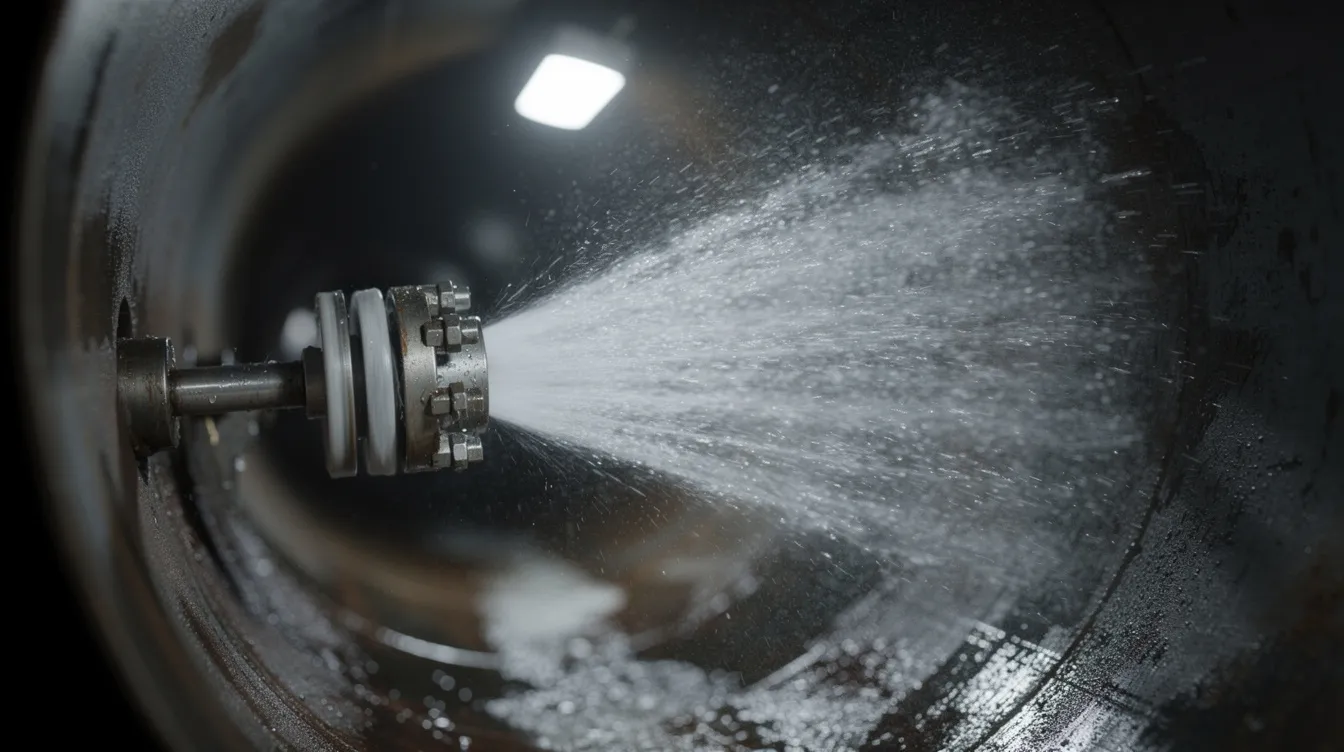
Hydro jetting uses water pressure up to 4,000 PSI through specialized rotating nozzles to scour pipe walls and flush debris downstream. Flow rate (measured in gallons per minute) is equally important-high PSI breaks the blockage, while high GPM washes it out. Hydro jetting is effective for severe clogs and grease buildup, heavy sludge, mineral scale, and tree roots inside main lines. However, it can damage older or structurally compromised pipes, so a camera inspection should precede any high-pressure jetting job.
Camera Inspection
Using video camera inspections can accurately diagnose the cause of plumbing issues before a single piece of cleaning equipment enters the pipe. Sewer camera inspections reveal pipe conditions before cleaning-cracks, bellies, separations, root intrusion, and corrosion become visible in real time. Locator beacons pinpoint problem areas underground so the technician knows the exact location and depth.
Drain company websites should explain these tools in plain language with labeled images or short animations. This increases perceived expertise and captures SEO traffic for “hydro jetting” and “camera inspection” search terms.
Common Signs You Need Drain Cleaning Now
Paying attention to early warning signs prevents emergencies, water damage, and expensive main sewer line repairs. Most plumbing issues escalate gradually, giving homeowners time to act-if they know what to look for.
Slow drains in multiple rooms – When the sink, tub, and toilet all drain sluggishly at the same time, the problem is likely deeper than any single fixture. Slow drains across the house point to a restriction in the main drain or a shared branch line.
Gurgling toilets – Gurgling or bubbling sounds when water drains elsewhere in the house means air is being displaced in a partially blocked pipe.
Bad odors from floor drains – Foul smells rising from basement or garage floor drains suggest sewage is sitting in a blocked line below.
Recurring clogs in the same fixture – If you’re clearing the same drain every few weeks, a deeper obstruction is catching debris before it reaches the sewer.
Water backing up in a shower when the toilet flushes – This is a classic sign of a blockage. When water backs up in the shower as the toilet flushes, it suggests a blockage downstream that forces wastewater to find alternate paths.
One-off slow drains in a single sink are often DIY-fixable. Whole-house symptoms that affect multiple drains require a professional plumber with diagnostic equipment.
4 Critical Warning Signs of a Clogged Main Sewer Line
A clogged main line is far more serious than a single clogged sink. It carries health risks from raw sewage exposure, can cause structural damage to your home, and costs significantly more to repair the longer it’s ignored. Here are the four signs that the main sewer line is the problem:
1. Multiple drains backing up at once. Multiple drains backing up indicates a main sewer line clog, especially when the lowest drain in the house is affected first. Basement fixtures and ground-floor toilets are the first to show trouble because gravity sends backed-up water there.
2. Sewage or standing water at the sewer cleanout. If you open or observe the sewer cleanout cap outside and find standing sewage or drainage from the sewer cleanout pipe, that confirms a main sewer clog. This is a direct view into main sewer line trouble that should never be ignored.
3. Sewage in floor drains, showers, or tubs after heavy water use. When running the laundry, taking showers, and flushing toilets simultaneously causes sewage to appear in floor drains, the main line cannot handle the combined flow. Sewage in floor drains indicates a clogged main sewer line.
4. Sewage standing in the yard. Sewage standing in the yard signals a main sewer line issue-possibly a break or major blockage in the lateral between the house and the street. Soft spots, sinkholes, or unusually green patches near the sewer route are related indicators.
If you observe any of these, call a professional immediately. Running more water through the system only makes the backup worse.
Common Causes of Clogged Drains and Sewer Lines
Understanding what causes clogs helps select the right solution-snaking, hydro jetting, or full pipe repair-and informs homeowners about prevention.
Household Causes
- Grease – Grease buildup in kitchen drains leads to slow drainage. Cooking fats solidify inside pipes, narrowing the opening over time.
- Hair and soap – Hair and soap residue accumulate in bathroom drains, creating dense mats that trap more debris with every shower.
- Foreign objects – Foreign objects like wipes can block toilet drains. Products marketed as “flushable” rarely break down fast enough to pass through a residential system. Paper towels are another common offender.
- Food scraps and dish soap buildup – Even with a disposal, starchy and fibrous foods create sticky residue inside drain lines.
Environmental and Structural Causes
- Tree roots – Tree roots can intrude sewer lines and cause clogs. Roots are drawn to moisture and nutrients leaking from cracked joints.
- Scale buildup – Older pipes are more prone to clogs from scale buildup. Cast iron and galvanized steel develop internal corrosion and mineral deposits that narrow flow over decades.
- Pipe bellies and offsets – Sagging or shifted pipe sections trap solids and slow flow, creating chronic blockage points.
Older neighborhoods built before 1980 frequently have clay or jointed cast iron sewer lines, which are far more vulnerable to root intrusion and corrosion than modern PVC systems. Service businesses should localize this section on their websites-mentioning local soil conditions, common tree species, and housing-stock age-to boost SEO relevance and connect with the community they serve.
Tree Roots in Sewer Lines: Why They Happen and How to Fix Them
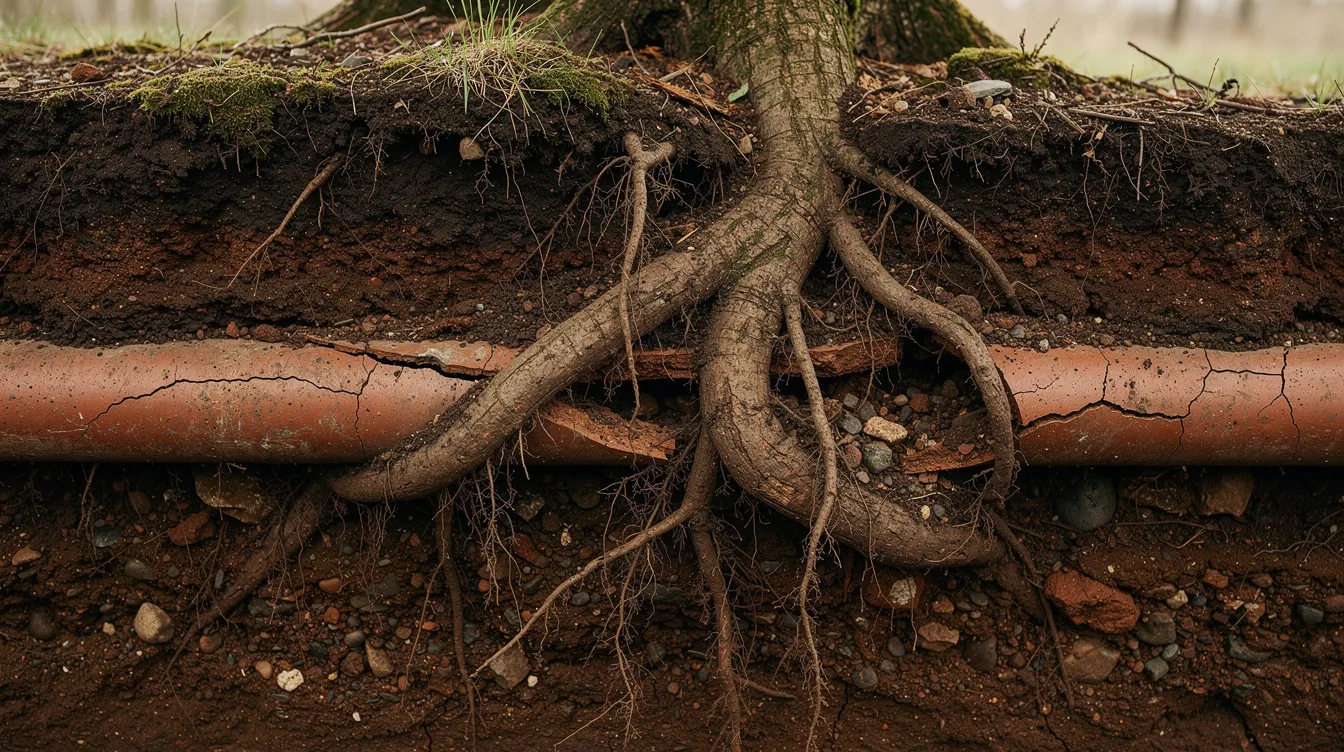
Tree roots naturally seek moisture and nutrients, making older, cracked sewer lines a prime target. Even a hairline crack at a pipe joint releases enough moisture vapor to attract root growth from trees dozens of feet away.
Once roots enter through joints, tiny cracks, or broken sections, they expand inside the pipe. The root mass catches toilet paper, waste, and grease until the main line is severely narrowed or fully blocked. In many U.S. cities, over 50% of sewer blockages are attributed to root intrusion.
Methods to Address Roots
- Heavy-duty cabling – Mechanical root cutters slice through root masses, restoring flow quickly. Roots typically regrow within 1 to 3 years if the entry point isn’t sealed.
- Hydro jetting – High-pressure water flushes root debris, sludge, and organic buildup from pipe walls. Hydro jetting is used by professionals to clear severe grease buildup and tree roots.
- Camera inspection – Camera footage after cleaning reveals whether the pipe is structurally sound or needs repair.
Cleaning alone is often a temporary fix if the pipe has cracks or broken joints. Repair options like trenchless CIPP lining or pipe bursting can seal entry points without digging up the entire yard. Homeowners with mature trees close to the sewer route and recurring main line root issues should schedule periodic maintenance cleanings-annually in most cases-to stay ahead of regrowth.
Hydro Jetting vs. Traditional Snaking
Both methods have a place in professional drain service: snaking breaks blockages, while hydro jetting scours the full pipe diameter. Choosing between them depends on the situation.
When Snaking Is Appropriate
Snaking works well for isolated clogs, softer material like hair or soap buildup, and single-drain problems. It’s also the safer first attempt when pipe condition is unknown-a snake is gentler on fragile or aging pipes. Mechanical methods like plungers or snakes are safer for pipe integrity than chemicals, and mechanical methods are more effective for stubborn or recurring clogs than DIY chemicals.
When Hydro Jetting Is Superior
Hydro jetting is the better choice for heavy grease in kitchen lines, long sections of scale, sludge, or severe tree root growth in main lines and commercial drain lines. Because hydro jetting uses water pressure up to 4,000 PSI, it removes buildup that a snake simply pushes aside.
| Factor | Snaking | Hydro Jetting |
|---|---|---|
| Best for | Soft clogs, single drains | Grease, roots, full-pipe cleaning |
| Cost | Lower | Higher |
| Pipe risk | Minimal | Risk in fragile/old pipes |
| Thoroughness | Punches through clog | Cleans entire pipe diameter |
| Pre-inspection needed | Optional | Strongly recommended |
Safety Considerations
A plumber might recommend camera inspection before hydro jetting older or fragile sewer lines to avoid damaging corroded cast iron or brittle clay pipe. Skipping the inspection can turn a cleaning call into a costly repair.
Service businesses should host separate landing pages for “hydro jetting” and “drain snaking” keywords. Content from this comparison section gives each page depth and helps rank for both terms.
DIY Drain Cleaning vs. Hiring a Professional Plumber
DIY can handle minor issues, but it has clear limits-especially when dealing with a main line blockage or recurring clogs that keep coming back.
Safe DIY Methods
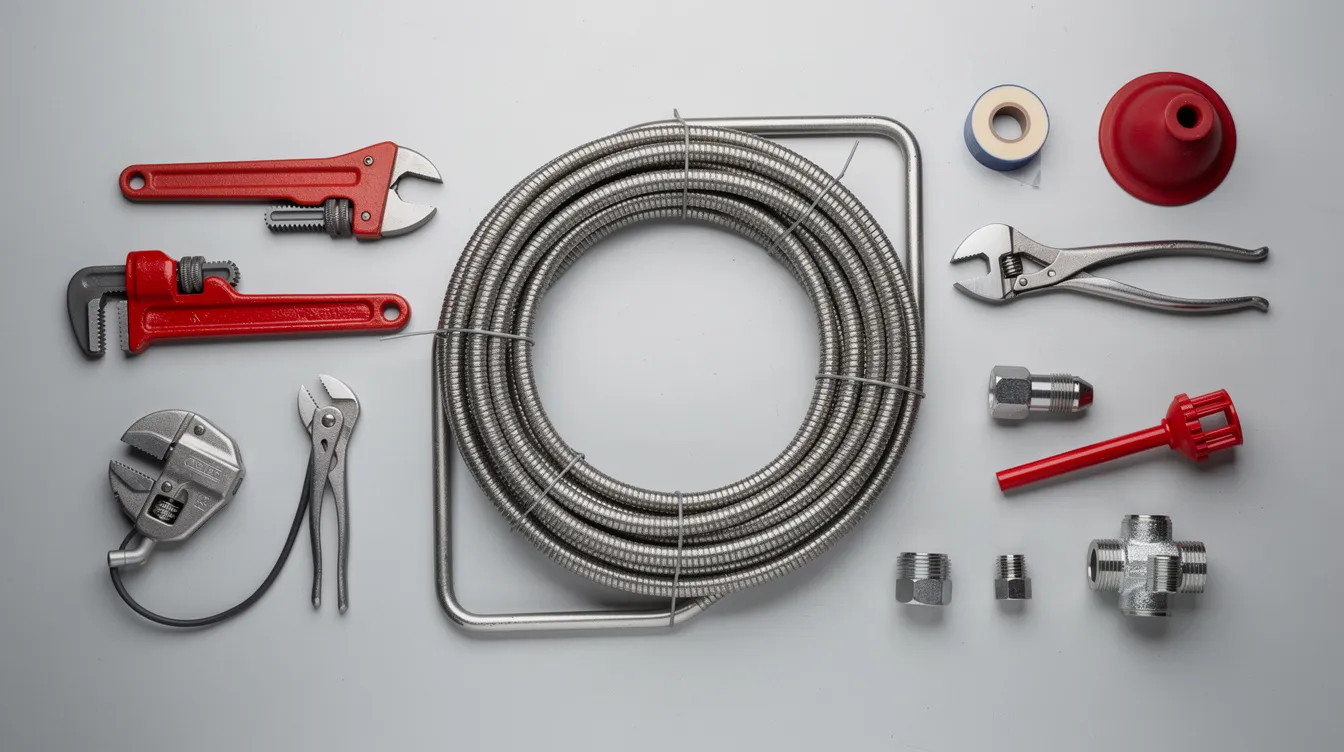
- Plungers – Plungers are the go-to tools for sink and toilet clogs. A good seal and steady pressure can dislodge many soft blockages.
- Hand augers – Hand augers are suitable for breaking up stubborn clogs in drains close to the fixture. They’re affordable and effective for hair and small obstructions.
- Removing the P-trap – Removing the P-trap can directly resolve sink blockages caused by trapped food or debris. Keep a bucket underneath.
- Natural solutions – Hot water is effective for loosening soap scum and minor buildup. A combination of baking soda, vinegar, and hot water works for light maintenance. However, hot water should not be poured down plastic pipes to avoid warping.
What to Avoid
Frequent use of harsh chemicals can corrode pipes and should be avoided. Chemical cleaners can dissolve hair and grease but may damage pipes over time, especially older metal lines. They also create hazards for plumbers who work on the lines later.
When to Call a Professional
Stop DIY attempts and call a professional plumber immediately when:
- Sewage backs up into any fixture
- Multiple drains are slow or clogged simultaneously
- Water appears at the sewer cleanout
- DIY methods may not work for blockages deeper in the sewer line
- Deep clogs may require professional services for effective removal
Professional cleaning prevents recurring blockages by thoroughly removing debris that DIY tools leave behind. Service businesses can create a “When to DIY vs. Call Us” blog post using this exact structure to capture intent-driven search traffic.
How Much Does Drain Cleaning Typically Cost?
Pricing depends on clog location, severity, access, and whether hydro jetting or camera inspection is needed. There’s no universal flat rate, but here are realistic ranges to help homeowners plan.
National-Style Cost Ranges
| Service | Typical Cost Range |
|---|---|
| Single interior drain (snaking) | $100–$275 |
| Main sewer line cleaning | $175–$800+ |
| Hydro jetting | $300–$1,400+ |
| Camera inspection | $100–$600 |
Regional pricing varies significantly. Drain cleaning costs in Colorado range from $100 to $500. Seattle drain cleaning costs for small drains range from $300 to $600, while main line cleaning in Seattle typically costs between $450 and $900. Hydro jetting costs in Seattle can exceed $2,300 for complex jobs. Roto-Rooter charges vary based on clog type and job size, as do most national and local providers.
Pricing Models
Drain services typically use one of these structures:
- Flat-fee specials per line or fixture (most common for basic work)
- Hourly rates for complex diagnostics or extended jobs
- Package pricing that bundles cleaning plus camera inspection for a combined cost
Watch for Hidden Costs
Very low advertised rates-like “$79 drain cleaning”-often exclude main line work, charge extra for roof access or after-hours service, and don’t include diagnostic fees. Always ask what’s included before you pay or schedule. Transparent, itemized estimates save homeowners from surprise bills. Service business websites that display example price ranges or “starting at” pricing build trust without making one-size-fits-all promises.
The Truth About $99 Drain Cleaning Specials
Ultra-low advertised rates deserve closer scrutiny from homeowners. They’re not necessarily scams, but what’s included is almost always limited.
Common Limitations
- Valid only for one easily accessible small drain (a sink or tub)
- Excludes the main line, multiple drains, and the sewer cleanout
- No camera inspection included
- Heavy upsell pressure once the technician is onsite
How the Model Works
Some offers act as “loss leaders” designed to get a technician into the house. Once inside, additional hidden fees, “emergency” surcharges, or expensive repair recommendations may appear. The $99 price covers a basic snake job on a single fixture-not the complex diagnostic and cleaning most homeowners actually need when they call.
Questions to Ask Before Booking
- What specific drain line is covered at the advertised price?
- Is the main sewer line included, or is that a separate charge?
- Is a sewer cleanout required, and what if access is difficult?
- What happens if the clog cannot be cleared with basic equipment?
Service businesses that position their pricing as honest and upfront on their websites-clearly stating what’s included and avoiding bait-and-switch language-consistently outperform competitors on trust and conversion rate.
Drain Cleaning for Homes vs. Commercial Drain Cleaning
Residential and commercial drain service share the same core methods, but the scale, frequency, and stakes differ significantly. Commercial properties face higher daily usage, stricter health code enforcement, and greater financial consequences from downtime.
Typical Commercial Needs
- Restaurants – Grease-clogged kitchen drain lines and floor drains are constant challenges. Without regular maintenance, grease accumulates fast enough to cause backups within weeks of a cleaning.
- Multi-family housing – Apartments and condos generate heavy main line loads. Branch lines serving multiple units can clog from combined hair, grease, and toilet paper volume.
- Retail and office buildings – Restroom fixtures and break room sinks see consistent use. Backup during business hours creates liability and customer experience problems.
Why Commercial Relies More on Hydro Jetting
Commercial drain cleaning often relies more heavily on hydro jetting because the volume of grease, sludge, and debris overwhelms cable machines. Grease interceptor maintenance and scheduled preventive maintenance programs keep commercial properties compliant and flowing.
What Commercial Clients Value
- Minimal downtime and fast turnaround
- After-hours or weekend scheduling so work begins outside peak business hours
- Documented service reports for maintenance records and health inspections
Agencies like Digital Vibes Agency highlight these differences when building landing pages targeting commercial drain cleaning and related B2B keywords. Separate residential and commercial pages capture distinct search intent and convert better than a single generic service page.
Preventive Maintenance: Keeping Drains and Sewer Lines Flowing
Preventive maintenance is the most cost-effective way to avoid emergency drain calls and main line blockages. In most cases, the cost of routine maintenance is a fraction of a single emergency visit.
Homeowner Habits That Matter
- Never pour grease down the drain-let it cool and dispose of it in the trash
- Use drain strainers in showers and kitchen sinks. Using drain strainers can help prevent hair and food particles from clogging drains
- Flush only toilet paper-no wipes, paper towels, or feminine products
- Run hot water through infrequently used fixtures to keep traps full and prevent sewer gas from entering the house
- Avoid pouring dish soap or fats in large quantities into kitchen drains
Professional Maintenance Options
- Annual or semiannual main sewer line cleaning for older homes
- Scheduled hydro jetting for grease-prone kitchen lines in homes and businesses
- Periodic camera inspection on older sewer lines with known issues
Property managers and commercial clients benefit from contracts that bundle regular drain service across multiple locations or units. This reduces per-visit cost and ensures consistent scheduling.
Plumbing businesses should consider converting this section into a downloadable “Drain Maintenance Checklist” lead magnet on their website. It grows email lists and nurtures local leads who aren’t ready to book yet but will be when the next clog hits.
Understanding Your Sewer Cleanout and Main Line Access
A sewer cleanout is a capped pipe-usually vertical or angled-that provides direct access to the main sewer line. It’s the preferred entry point for professional drain cleaning services because it allows technicians to work efficiently without pulling toilets or accessing the roof.
Common Cleanout Locations
Depending on your region, house style, and build year, cleanouts are typically found:
- Near the exterior foundation wall, at ground level
- In basements or crawl spaces
- In garages or utility rooms
- In side yards, sometimes hidden under landscaping, gravel, or decking
Look for a capped vertical pipe with a square or hex fitting, often 3 to 4 inches in diameter. It’s usually close to where the sewer exits the home toward the street.
Why Accessibility Matters
Having a properly accessible cleanout can reduce service time, cost, and mess compared to alternative access methods. When a technician has to pull a toilet to reach the main line, the appointment takes longer and costs more. Homeowners should locate and keep their cleanout accessible-clear of soil, mulch, or storage.
Service providers should include a short photo guide on their website showing common cleanout locations. It helps homeowners prepare for their appointment and reduces wasted time on site.
How Long Does Professional Drain Cleaning Take?
Most standard drain calls are completed the same day, but the duration depends on clog severity, pipe condition, and whether the main line is involved.
Typical Time Frames
| Job Type | Estimated Duration |
|---|---|
| Single sink or tub (snaking) | 30–60 minutes |
| Main sewer line cleaning | 1–3 hours |
| Main line + camera inspection | 2–4 hours |
| Main line + hydro jetting | 2–4 hours |
Factors That Extend the Job
- Locating a buried or hidden sewer cleanout
- Complicated access (deep pipes, limited crawl space)
- Older or fragile pipes requiring careful equipment handling
- Diagnosing repeated or intermittent blockages that don’t appear during a single visit
Scheduling Expectations
Most companies offer morning and afternoon windows. Emergency response times vary-some providers guarantee arrival within 1 to 2 hours for true emergencies, while others batch emergencies into the next available slot. Weekend and after-hours availability depends on the company.
Service business websites should clarify average visit duration and emergency response policies upfront. It reduces pre-booking phone calls and helps homeowners plan their day.
Emergency Drain Service: When You Can’t Wait
There’s a clear difference between routine slow drains that can wait a day or two and true emergencies that require immediate response. Knowing which is which saves both money and stress.
Emergency Scenarios
- Sewage backing into tubs or floor drains
- Water quickly rising from a basement floor drain or the lowest drain in the house
- Sewage visible at the sewer cleanout or pooling in the yard
- Total loss of drainage in the home or business-nothing drains anywhere
What to Do While Waiting
- Stop running all water immediately-no laundry, showers, or flushing
- Shut off the water heater if flooding threatens the unit
- Keep people and pets away from contaminated areas
- Do not pour chemical cleaners into backed-up drains-they won’t solve the problem and may create hazards for the arriving technician
How Professionals Handle Emergencies
A professional drain service prioritizes emergency calls, often sending dedicated main line or emergency technicians with trucks fully equipped for hydro jetting and camera inspection. These crews work hard to restore flow and identify the root cause in a single visit so the problem doesn’t repeat.
Businesses should highlight 24/7 or extended-hours service, response guarantees, and clear emergency contact numbers on every page of their website. When homeowners face emergencies, they’re searching on their phone-and they’ll call the first company that makes it easy to connect.
Choosing a Reliable Drain Cleaning Company
Choosing the right drain service can mean the difference between a quick, affordable fix and repeated, costly problems. Not all companies operate at the same standard, and the cheapest option rarely delivers the best outcome.
Key Qualifications to Look For
- Licensing and insurance – Verify both. An uninsured plumber working on your sewer creates liability for you.
- Local experience – A company familiar with your area’s pipe types, soil conditions, and common sewer issues will diagnose problems faster.
- Equipment capabilities – They should own and operate camera inspection, hydro jetting, and cable machines-not just one method for every situation.
- Transparent pricing – Written estimates before work begins, with clear line items. No surprise fees after the job is done.
Red Flags
- High-pressure upselling before any diagnostic work
- Vague or verbal-only pricing
- Reluctance to show camera footage or explain recommended repairs in plain language
- No satisfaction guarantee or warranty on work performed
Reviews and Reputation
Check online reviews, years in business, and whether the company responds professionally to both positive and negative feedback. A company embedded in the community with a track record of honest work is worth more than a coupon.
Digital Vibes Agency helps local drain and plumbing companies communicate these credibility factors clearly across their website, Google Business Profile, and ad campaigns-so the right customers find and trust them before they ever pick up the phone.
How Digital Vibes Agency Helps Drain Services Get More Calls
Digital Vibes Agency, based in Chandler, AZ, specializes in driving local leads for service businesses including plumbers and drain cleaning companies. If you’re a drain service provider reading this article, everything above is the kind of content strategy that generates organic traffic and converts visitors into booked appointments.
SEO That Targets High-Intent Keywords
We build and optimize pages to rank for searches like “drain cleaning services near me,” “main sewer line repair,” “commercial drain cleaning,” and “hydro jetting.” These aren’t browsing searches-they’re people with an active problem ready to schedule service.
PPC for Immediate Visibility
Google Ads campaigns targeted to emergency drain service searches, call-only ads, and location extensions capture high-conversion local clicks. When someone searches “emergency drain cleaning” at 10 PM, your ad needs to be at the top.
Content Marketing and Web Design
We build fast, mobile-friendly landing pages for each drain service, add trust signals like reviews and certification badges, and publish educational content-articles exactly like this one-that demonstrate expertise and capture search traffic month after month.
Analytics That Show ROI
Social media management, email marketing, and analytics dashboards show exactly how many calls and form fills come from drain-related campaigns. No guesswork-just data that tells you what’s working and where to invest next.
If your drain service company is ready to save time on marketing and start generating consistent local leads, Digital Vibes Agency is built for exactly that.
Frequently Asked Questions About Drain Cleaning
Below are answers to common questions that homeowners and property managers ask but that aren’t always covered in detail on service websites. For existing patients of recurring drain problems or first-time callers, these should help clarify what to expect.
Can regular drain cleaning extend the life of my pipes?
Yes. Scheduled cleaning removes corrosive buildup, grease, and debris that accelerate wear on older cast iron or steel lines, potentially delaying costly replacements by years. While cleaning cannot fix already broken or collapsed sections, it keeps otherwise sound pipes flowing at full capacity and reduces the pressure spikes caused by repeated backups. For older homes or properties with large nearby trees, annual main line service is a smart investment. Newer PVC systems typically need less frequent attention unless specific problems arise.
Is it safe to use my plumbing right after hydro jetting?
In most cases, homeowners and businesses can resume normal water use immediately after hydro jetting because no harsh chemicals are left in the lines-it’s just water. The plumber may ask you to run water through certain fixtures during final testing, and any temporary restrictions will be clearly communicated before they leave. To get the most value from a freshly cleaned line, avoid flushing wipes or pouring grease right after a cleaning so the newly cleared pipes stay clean as long as possible.
What should I do if I don’t know where my sewer cleanout is?
Start by checking near exterior walls, along driveways, in basements, or in utility rooms for capped vertical or angled pipes that may be labeled as cleanouts. Older homes sometimes have buried or hidden cleanouts under landscaping, gravel, or decking. Don’t dig or cut blindly-instead, schedule a drain service visit where the technician can locate the cleanout with experience and locating tools while also assessing the drain system’s overall condition.
How often should a restaurant schedule commercial drain cleaning?
Many restaurants benefit from quarterly hydro jetting or at least biannual service, depending on kitchen volume, menu type (fried foods versus low-grease menus), and past history of backups. Combining regular grease trap or interceptor maintenance with scheduled floor drain and main line cleaning dramatically reduces emergency overflows and health inspection issues. Restaurant owners should work with their drain service provider to create a custom maintenance calendar and keep written records for compliance purposes.
Does homeowners insurance cover main sewer line clogs?
Standard homeowners policies often do not cover routine clogs or gradual damage like rust or root intrusion. However, some policies may cover certain sudden, accidental events-the specifics depend on your carrier and policy language. Some insurers now offer optional “service line” endorsements that help cover repairs or replacement for exterior sewer lines between the house and the street. Review your specific policy or call your insurance agent directly. If you plan to file a claim, request detailed documentation and camera footage from the plumber to support your case.
Share this post:


