

If the same toilet in your house keeps backing up every few weeks, the problem usually isn’t the toilet. It’s a habit — something small and routine that’s been quietly loading the pipe every single day until it finally says no. The good news is that habit is almost always identifiable, and once you spot it, the fix costs nothing.
Ready Rooter handles clogged toilet repair in Bellevue, WA on a near-daily basis, and the same five causes show up again and again. Here’s what to look for before you call.
1. Flushing Anything That Isn’t Toilet Paper or Waste
This is the single biggest cause of recurring clogs, by a wide margin. Toilet paper is engineered to break apart in water within seconds. Almost nothing else flushed down a toilet is.
Common offenders that don’t break down:
- “Flushable” wipes (they aren’t — the label is marketing, not plumbing fact)
- Paper towels and tissues
- Feminine hygiene products
- Cotton swabs and dental floss
- Diaper liners and baby wipes
- Cat litter, even “flushable” varieties
These items either lodge in the trap immediately or travel further and snag on a rough spot, a root intrusion, or an old joint — becoming the anchor point every future flush catches on. If you’re seeing the same toilet clog repeatedly, this is worth ruling out first, and it’s the reason clogged toilet repair professionals ask what’s been flushed before they ask anything else.
The fix: a small trash can next to the toilet, used consistently by everyone in the house. It sounds too simple to matter. It’s the single most effective clog-prevention step there is.
2. Overusing Toilet Paper
Toilet paper breaks down — but not instantly, and not infinitely. A thick wad flushed all at once can overwhelm a toilet’s trap or a narrow section of pipe before it’s had time to disintegrate, especially in older toilets with a smaller trapway or in homes on a longer, older lateral line.
The fix: use less per flush where you can, and consider switching to a thinner, faster-dissolving or septic-safe toilet paper if clogs are a recurring issue in your household. It’s a minor adjustment that measurably reduces how hard your plumbing has to work.
3. Ignoring the Early Warning Signs
A toilet rarely clogs completely without warning first. The signs show up days or weeks ahead:
- Water draining more slowly than usual after a flush
- A gurgling sound from the toilet or a nearby drain
- Needing a second flush to fully clear the bowl
- Water rising higher than normal before it drains
Each of these means something downstream is already partially restricted — buildup, an early root intrusion, or a narrowing in the line. Address it now with a clogged toilet service call and it’s usually a straightforward fix. Ignore it and it typically becomes a full backup at the worst possible time. If clogs keep coming back in the same fixture even after clearing them, there’s often a structural cause behind the pattern worth having a professional look at.
4. Flushing Too Much at Once
Big flushes — heavy waste, a full roll’s worth of paper, or several items flushed back-to-back — ask a lot of a trapway that’s only a couple of inches wide. Even a perfectly healthy toilet can be overwhelmed by volume alone.
The fix: flush more often, in smaller amounts, rather than saving it all for one flush. Two normal flushes clear a toilet far more reliably than one overloaded one, and it puts less strain on the line every single time.
5. Using a Plunger or Auger the Wrong Way
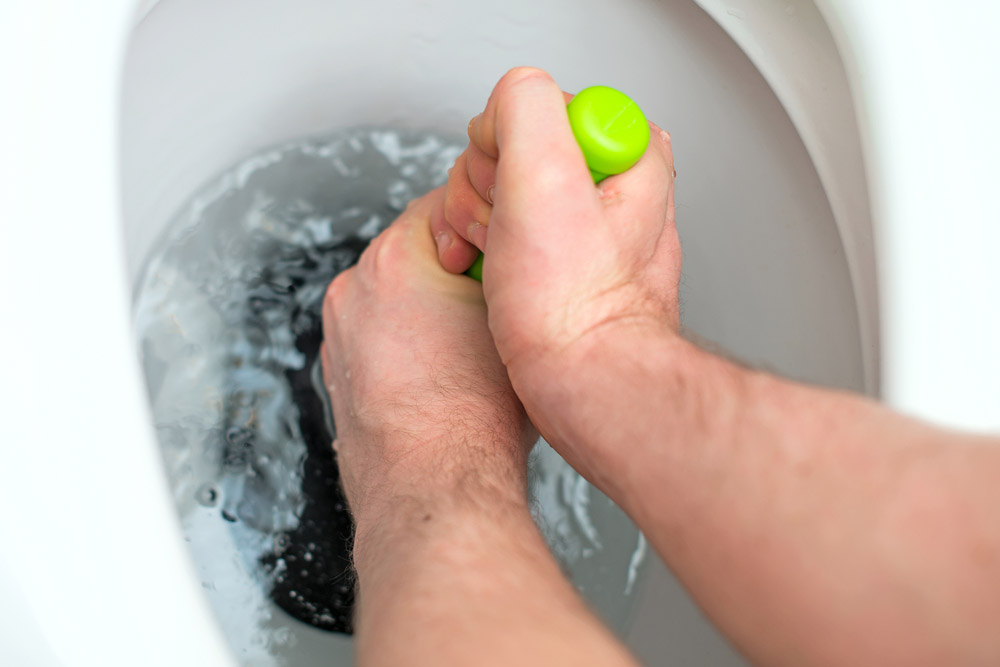
This one surprises people: attempting to clear a clog yourself can sometimes make it worse. A plunger used with a shallow, aggressive motion can push the blockage further down the pipe instead of breaking it up — turning an easy fix into one that now requires a longer auger or professional attention. A toilet auger used with too much force, or fed in too fast, can scratch porcelain or damage the internal trapway.
The right technique: a plunger needs a full water seal over the flange and a slow, steady push-pull motion — not a hard jab. If a plunger doesn’t clear it within a few tries, stop. Repeated aggressive attempts rarely succeed where the first few didn’t, and they’re the most common way a simple clog turns into a service call anyway.
When It’s More Than a Habit
If you’ve addressed all five of the above and the same toilet still clogs on a predictable cycle, the cause probably isn’t behavior anymore. That pattern points to something in the pipe itself — a partial root intrusion, a low spot (belly) in the line, or a narrowing from age or corrosion. A camera inspection settles the question in under an hour and tells you exactly what’s there before you spend money guessing.
Prevent It Going Forward
- Keep a trash can within reach of every toilet in the house
- Set the expectation with kids and guests that only toilet paper and waste get flushed — a small, visible sign near the toilet helps more than you’d think
- Don’t rely on chemical drain cleaners for toilets; they’re hard on older pipe and rarely reach the actual clog location
- If clogs keep recurring despite good habits, get the line cameraed rather than repeating the same plunger routine every few weeks
Frequently Asked Questions
Are “flushable” wipes actually safe to flush? No. Despite the labeling, flushable wipes do not break down like toilet paper and are one of the leading causes of both toilet clogs and municipal sewer blockages. Treat them as trash, not flushable.
Why does only one toilet in my house keep clogging? It usually means that specific toilet has a lower-flow trapway, sits on a longer or older branch line, or is simply used differently (more paper, different habits) than the others. If it keeps happening despite good habits, that toilet’s line is worth a closer look.
Can a clogged toilet fix itself? Sometimes a partial clog clears on its own with normal water flow, but a true blockage won’t resolve without intervention — and waiting usually lets it get worse, not better.
When should I stop trying to fix it myself and call a plumber? After two or three careful plunging attempts with no improvement, or any time you see sewage backing up into a tub or floor drain. At that point, further DIY attempts risk making things worse.
Still Clogging? Let’s Find Out Why
If you’ve tried everything above and that toilet is still giving you trouble, it’s time for a professional look rather than another plunger session. Get in touch with Ready Rooter today, and we’ll diagnose it, fix it, and help make sure it doesn’t keep happening.
Share this post:


