


Not every leak announces itself with a puddle on the floor. Some of the most destructive water leaks hide behind walls, under concrete slabs, and in buried yard lines-silently wasting thousands of gallons and eating away at your home’s structure. This guide walks you through how professionals find leaks, what signs to watch for, and how you can perform basic checks yourself.
Key Takeaways
- Modern plumbing leak detection relies on non-invasive tools-acoustic devices, thermal imaging, pipe cameras, and pressure testing-to find leaks without tearing up walls or floors.
- Homeowners can use a simple water meter test to detect hidden water leaks before calling a plumber, making it an effective first step.
- Slab leaks under concrete foundations are among the most urgent plumbing issues in the country because they can undermine footings and cause significant damage that costs thousands of dollars to repair.
- Timely leak detection prevents further damage and reduces costs, saving homeowners money on both repairs and water bills.
- If you suspect a slab leak or underground leak, contact a professional plumbing company for accurate leak detection and long-term solutions.
Understanding Plumbing Leak Detection
Plumbing leak detection in a residential setting means locating water leaks that aren’t immediately visible-leaks inside supply lines, drain lines, service lines, and pipes running beneath foundation slabs. The process uses specialized equipment to pinpoint the exact location without unnecessary demolition. American Leak Detection, a company with over 50 years of experience, helped pioneer the non-invasive approach that is now industry standard.
The difference matters: a dripping faucet under a kitchen sink is obvious and easy to fix. A leakage inside a wall cavity, under a concrete slab, or in a buried yard line can go unnoticed for weeks. These concealed problems require advanced leak detection methods to locate and repair.
Typical parts of a plumbing system where leaks develop include copper or PEX supply pipes, galvanized steel lines in older homes, PVC drain lines, and the service line running between the street and water meter. Professional leak detection combines visual diagnostics, acoustic listening, and pressure testing-along with tools like thermal imaging cameras, video pipe inspection cameras, and water leak detectors-to find leaks with precise accuracy. This approach saves money by narrowing repairs to the exact damaged section of pipe, so homeowners avoid paying for unnecessary demolition.
Common Signs You Have a Hidden Water Leak
Before you call a plumber, review this checklist of symptoms that commonly point to hidden leaks in your house.
Interior signs:
- An unexplained increase in your monthly water bill-higher water bills may indicate a plumbing leak even when usage hasn’t changed
- Running water sounds when all fixtures are shut off, which is one of the clearest signs something is wrong
- Musty odors in bathrooms, basements, or near walls, which can be a sign of hidden water leaks and mold growth
- Peeling paint, bubbling drywall, or warped baseboards
- Damp spots on walls or ceilings that suggest possible leaks behind surfaces
- Warm or cold “mystery” spots on tile or concrete floors
- Toilets that run intermittently-toilets are a common source of hidden leaks and can waste over 860 gallons per month from a single worn flapper
Exterior and structural signs:
- Soggy spots or patches of extra-green grass along a buried water line
- Soil erosion near the foundation or cracks in slab or brickwork
- Mildew on exterior walls
Slab leak clues:
- A warm stripe on a concrete floor above a hot-water line
- Hairline cracks in the slab that keep widening
- Continuous water meter movement even with all fixtures off
Health and safety: Undetected leaks can lead to health problems and hazards. Mold can grow behind walls within weeks, wet floors create slipping hazards, and leakage near wiring raises electrical risks. Small leaks can cause thousands in property damage if left alone.
DIY Leak Checks: Using Your Water Meter to Detect Water Leaks
Homeowners can perform a basic leak detection test to confirm whether the plumbing system has a hidden leak before calling a plumber. The water meter test is an effective method for this, and it’s a smart first step.
Start by making sure every water-using fixture and appliance in your house is turned off. Shut off dishwashers, washing machines, ice makers, irrigation systems, and confirm no toilets are filling. Next, locate your water meter-often in a ground box near the curb or in a basement utility area. Lift the lid carefully and look for the leak indicator, which is usually a small triangle or dial that spins when water is flowing through the system.
Record the meter reading, then wait 15 to 30 minutes with absolutely no water use in the house. Re-check the reading. Any movement or change confirms a leak somewhere in the line. Technicians use this same approach to determine whether a leak is inside the house or in the main service line.
- You can also attach a pressure gauge to an exterior hose bib, note the pressure reading, and wait 10–15 minutes. A pressure drop suggests a leak between the meter and house or within interior lines.
A word of caution: DIY methods can confirm that a leak exists but cannot locate it. Professional leak detection is still needed to find leaks accurately and decide on the right repair strategy, avoiding unnecessary wall or slab demolition.
Professional Leak Detection Techniques Used by Plumbers
Licensed plumbers combine experience with multiple technologies to detect leaks quickly and non-invasively, minimizing damage to finished surfaces. Professional leak detection uses non-invasive methods to locate leaks, and each tool addresses a different scenario.
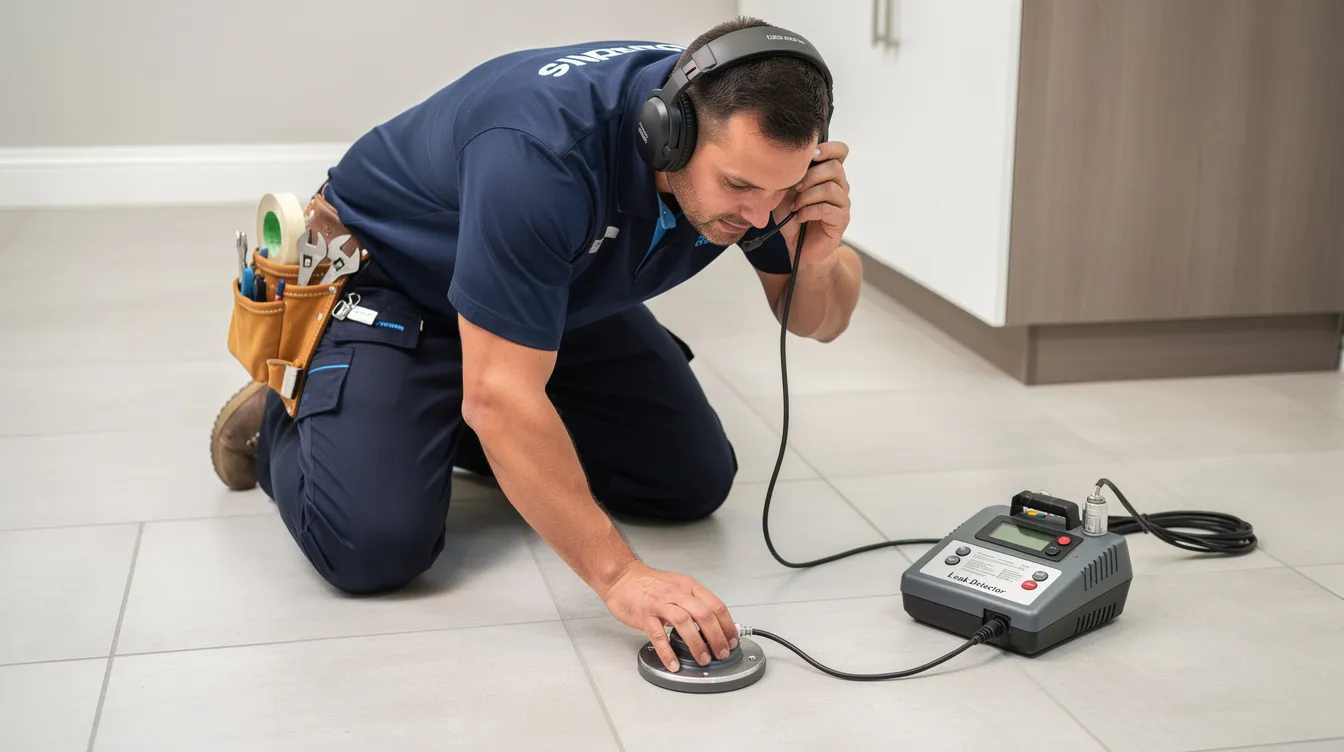
Acoustic devices: Acoustic leak detection uses specialized microphones to identify escaping water. Ground microphones and acoustic disc plates amplify the sound of pressurized water escaping from pipes behind drywall, cabinets, and concrete. Acoustic devices can detect leaks through walls and floors, and they perform especially well on metal pipes and small-diameter lines. Acoustic detection is also effective for locating underground service line leaks buried in the ground. Acoustic devices amplify sounds of dripping water that the human ear would never notice.
Noise correlating systems: Noise correlating systems analyze leak sounds using sensors placed at two known points on a pipe. A control unit uses the timing difference, pipe material, and diameter data to calculate the leak’s location-often within a foot or less of the actual point.
Video pipe inspection cameras: A flexible fiber-optic camera is inserted into drain or sewer lines to visually inspect for cracks, separated joints, or root intrusions. Video pipe inspection cameras provide precise leak location, letting plumbers see exactly where problems occur without excavation.
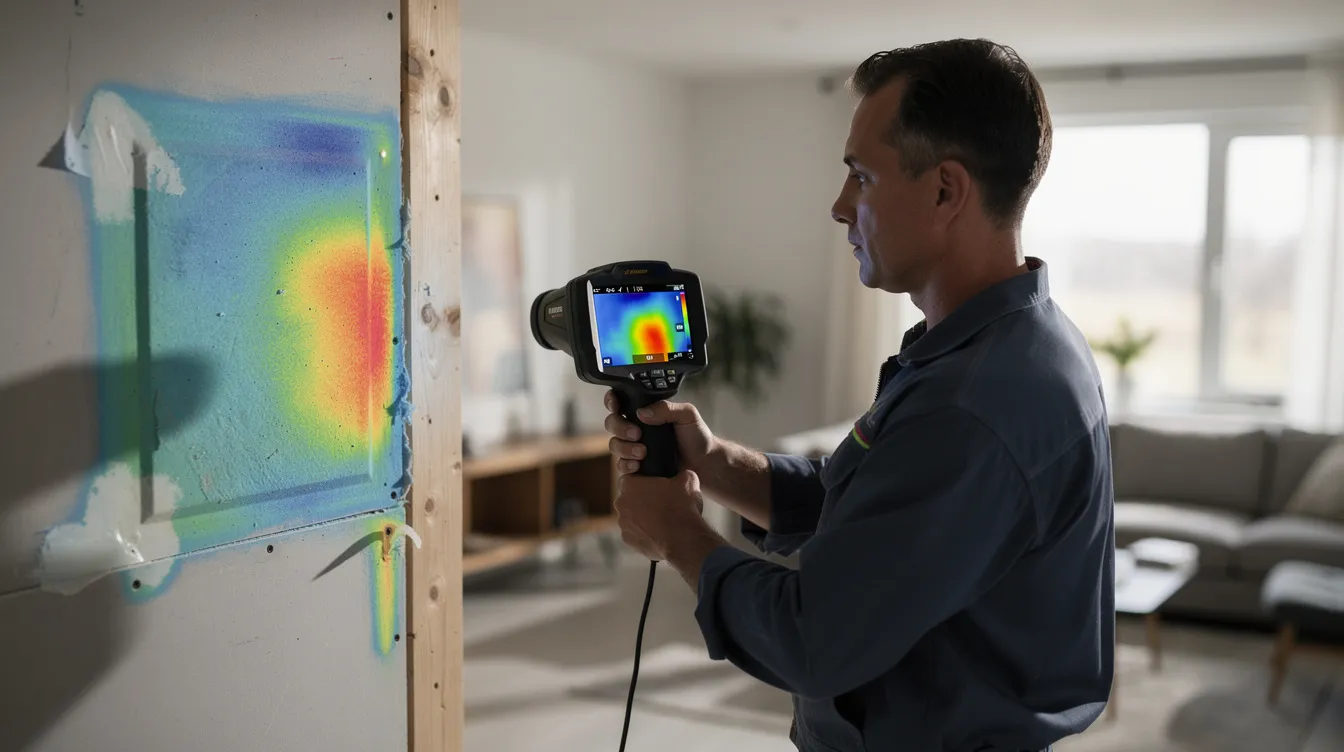
Thermal imaging: Thermal imaging identifies leaks by detecting temperature changes in walls and floors. An infrared camera maps warm or cool areas, making it possible to spot hot-water slab leaks or cold, damp zones from concealed water leaks without opening any surface. Thermal imaging detects leaks through temperature changes that are invisible to the naked eye.
Moisture meters and tracer gas: Moisture meters measure moisture content inside materials like drywall and wood to help locate hidden water leaks. For complex cases where standard methods are inconclusive, tracer gas detection methods introduce safe gas into pipes to find leak locations. These advanced tools complete the diagnostic picture.
Slab Leak Detection: Finding Leaks Under Concrete Foundations
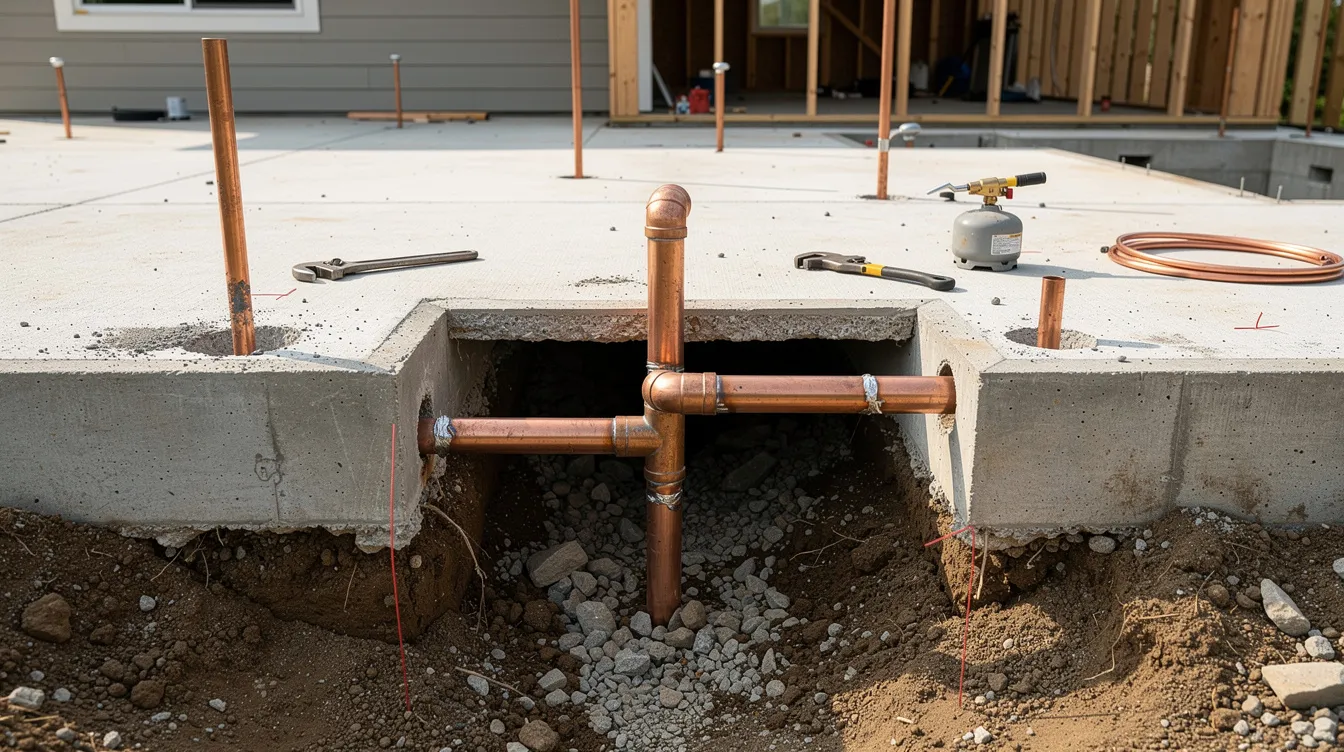
A slab leak is a water leak in plumbing pipes that run beneath or within a concrete foundation slab. These are common in homes built between the 1960s and early 2000s, where copper lines were installed in or under the slab without protective sleeving. Slab leak detection is a specialized job that requires the right equipment and experience.
Slab leaks are especially serious because they can wash out soil under the foundation, undermine footings, cause the slab to shift, crack tile or hardwood, and lead to mold that is nearly impossible to access. Slab leak repairs are among the most expensive plumbing repairs, with costs that range from roughly $630 to $4,400 depending on severity and access-an average of about $2,280.
- Pressure testing: Pros start by isolating hot and cold water lines independently. The pressure testing method measures water pressure to identify which loop is losing pressure and how fast, helping to analyze the scope of the problem.
- Acoustic detection through the slab: Plumbers pressurize the suspected line and use ground microphones or acoustic disc plates to listen through the concrete for the loudest leak sound.
- Combining thermal imaging with acoustic tools: Overlaying warm spots from an infrared camera with the loudest acoustic signature lets technicians pinpoint the exact location of a hot-water slab leak.
- Repair approaches: Options include direct access through a small, targeted opening in the slab, piping reroutes through walls and ceilings, or full repiping in older systems where pipes need to be replaced. The best approach depends on what plumbers find during the detection process-sometimes a single fix is enough, and sometimes the entire system needs solutions that address multiple failure points.
Preventive Water Loss Inspection and Ongoing Monitoring
Routine water loss inspections identify hidden leaks before damage occurs, catching small problems before they turn into expensive emergencies. Regular visual inspections can help detect water leaks, and visual inspections should include checking commonly used areas for signs of leaks-look for discoloration on ceilings, warping in hardwood floors, and slight staining around baseboards.
A professional inspection typically covers exposed plumbing for corrosion, static water pressure, crawlspace conditions, frost damage in colder climates, and ground movement near the foundation.
Smart leak detection systems can alert homeowners and monitor for unusual water usage. Point-of-use water leak detectors placed near water heaters, washing machines, and under sinks detect moisture and can shut off water automatically. Whole-home smart monitors installed near the main meter track real-time flow, flagging continuous nighttime use or abnormal patterns and sending smartphone alerts around the clock.
For the best results in the future, pair professional inspections every one to two months-or at least every one to two years-with monthly self-checks like quick meter readings and visual walkthroughs. This layered strategy is the most reliable way to detect water leaks early.
When to Call a Professional Plumber for Leak Detection
Knowing when to move from DIY checks to professional service can save you from escalating property damage. Here are the scenarios where you should call a plumber immediately:
- Rapid water meter movement with all fixtures off
- Visible slab or foundation cracks paired with warm floor spots
- Recurring wet drywall after previous repairs have been fixed
- Persistent musty smells with no visible source
- Sudden low water pressure, air in lines, or discolored water-these can signal pipe damage, especially in older galvanized or polybutylene systems that may need to be replaced
Professional plumbers bring insured, code-compliant repair options and can coordinate with insurance adjusters when water damage claims are involved, streamlining the complete restoration process. Whether you’re a homeowner or a seller preparing a property for review, having a documented leak detection report provides clarity and protection.
Leak detection can prevent costly property damage and repairs. We encourage you to reach out and schedule plumbing leak detection or slab leak detection service with our team. We use non-invasive methods, respond promptly, and work to deliver solutions that keep your home safe for years to come.
FAQ: Plumbing Leak Detection & Slab Leaks
Below are answers to a few common questions our customers ask that weren’t fully covered above.
How much water can a small hidden leak really waste?
Even a pinhole leak or a worn toilet flapper dripping at 0.02 gallons per minute can waste over 860 gallons per month. Larger leaks-like a stuck fill valve-can waste over 4,000 gallons per day. Over two months, a quarter-inch hole in a service line under 50 psi can waste roughly 788,000 gallons, costing hundreds of dollars in utility charges alone.
Is slab leak detection covered by homeowners insurance?
Many policies help pay for access and repair of sudden, accidental leaks, including slab leaks. However, most insurers do not cover replacing an entire aging plumbing system or damage from gradual wear and corrosion. Review your specific policy wording and speak with your agent to confirm what’s included before you need to perform a claim.
Can I use a store-bought water leak detector instead of hiring a plumber?
Consumer water leak detectors are great for early alerts-especially under sinks and near appliances-but they cannot replace the professional acoustic, thermal imaging, or camera inspections needed to accurately locate leaks inside walls or under slabs. Think of them as an alarm, not a diagnostic tool.
How often should I have my plumbing system checked for leaks?
We recommend a professional inspection every one to two years for homes over 15–20 years old, plus an inspection after any major freeze, remodel, or unexplained spike in the water bill.
What’s the difference between a slab leak and a regular plumbing leak?
A regular leak typically happens in accessible pipes inside walls, ceilings, or under cabinets. A slab leak specifically refers to leaks in water lines that run under or through the concrete foundation, making detection and repair more complex, more urgent, and more costly.
Share this post:


