


Not every plumbing problem means you need a new sewer line. But when certain symptoms keep showing up together, they usually point to something more serious than a simple clog. Knowing the difference between a minor fix and a failing sewer line can save you thousands of dollars, protect your home from sewage damage, and help you avoid a middle-of-the-night emergency.
This guide walks you through the most common sewer line replacement signs that Bellevue and Greater Seattle homeowners encounter, explains what each symptom really means, and covers what to do when you spot them.
Key Takeaways
- Repeated sewage backups, multiple slow drains, soggy lawn strips, and persistent foul odors are among the clearest warning signs that your main sewer line is failing-not just clogged.
- Many of these early signs appear months or even years before a complete sewer line failure or a collapsed sewer line, giving homeowners time to plan rather than panic.
- A professional sewer camera inspection is the fastest and most accurate way to confirm whether you need sewer line repair or a full replacement.
- Ready Rooter Plumbing and Drain offers 24/7 emergency main sewer line service across Bellevue and the Greater Seattle area, including trenchless options that often avoid tearing up your yard or driveway.
- If you notice sewage backup or widespread drain issues, call Ready Rooter or book online right away-early action prevents costly repairs and serious health risks.

What Counts as a “Sewer Line Replacement Sign”?
Some sewer line problems call for a quick repair-a localized crack, a minor root intrusion at one joint, or a single slow drain caused by buildup. Others are classic indicators that your main sewer line is approaching the end of its sewer line lifespan and likely needs full replacement.
The key distinction is scope. A single slow drain usually traces back to a fixture-level issue like a blocked P-trap or a clogged vent. But when multiple drains across different parts of the house show simultaneous symptoms-slow drainage, gurgling, backups-the problem almost certainly lies in the main line running from your house to the city sewer.
Replacement signs are typically:
- Recurring, not one-time events
- Present in multiple fixtures (toilets, tubs, floor drains)
- Visible both inside the house and outside in the yard or near the foundation
In severe cases, you may be dealing with a collapsed sewer line, broken sewer pipe, or extensive sewer line damage that no amount of spot fixing will resolve. For older Puget Sound homes built before the 1970s, the combination of aging pipe materials and these symptoms strongly suggests budgeting for full sewer line replacement rather than throwing money at repeated spot fixes. Unexplained spikes in water bills can also indicate sewer leaks that are quietly draining water-and your wallet.
Multiple Drains Clogged or Slow at the Same Time
When more than one drain backs up or runs slowly at the same time, the problem is almost always in the main sewer line rather than a single fixture’s P-trap or branch line. Multiple drains backing up at once signals main sewer line problems that need immediate attention.
Here’s what this typically looks like in practice:
- Flushing a toilet makes the bathtub gurgle or bubble
- Running the washing machine causes the basement floor drain to overflow
- The kitchen sink drains slowly while a first-floor toilet won’t flush properly
Slow drains across multiple fixtures may indicate systemic pipeline failure-not just a grease blob or hair clog. If professional drain cleaning only provides temporary relief and the same drains slow down again within weeks, that’s a strong signal of deeper sewer line damage such as cracking, displacement, or a partial collapse.
Multiple slow drains are one of the most reliable early warning signs that homeowners are nearing the point where repair or replacement decisions must be made. Ready Rooter technicians typically recommend a video camera inspection through an existing cleanout to determine whether the issue can be handled with hydro-jetting or whether sections of the sewer line are cracked, bellied, or collapsed.
Recurring Sewage Backups in Toilets, Showers, or Floor Drains
Sewage backups-wastewater rising back into toilets, tubs, or floor drains-are one of the most alarming warning signs of serious main sewer line trouble. If raw sewage is entering your living space, the sewer system is failing to carry waste away as designed.
Common scenarios include:
- A basement floor drain that backs up after heavy rain
- A first-floor shower filling with dirty water when an upstairs toilet is flushed
- Foul water rising in the tub when the washing machine drains
These events carry real health risks. Sewage contains bacteria, viruses, and parasites that pose health risks to everyone in the household. Contaminated flooring and walls can develop mold within 24–48 hours, and finished basements can sustain thousands of dollars in damage from a single backup event.
An occasional, one-time backup might be resolved with cleaning. But sewage backups happening several times a year usually mean the pipe is severely obstructed, sagging, or partially collapsed-conditions where a drain snake or even hydro-jetting offers only temporary relief.
If you experience active sewage backup, stop water use immediately, avoid running dishwashers or washing machines, and call Ready Rooter’s 24/7 emergency line for same-day service in Bellevue and surrounding cities.
Persistent Foul Sewage Odors Indoors or in the Yard
A healthy sewer line is sealed and airtight. Persistent sewer odors-that unmistakable rotten egg or sulfur smell-are never normal and almost always indicate sewer line damage or a broken sewer pipe somewhere in the system. Foul odors near plumbing fixtures suggest sewer line issues that should not be ignored.
Where you’re most likely to notice sewer smells:
- Around basement floor drains or lower-level bathrooms
- In crawl spaces beneath the house
- Outdoors, along the straight path between your house and the street where the main sewer line runs
- Near exterior cleanouts
The sulfur smell comes from hydrogen sulfide, a sewer gas that can cause headaches and nausea with prolonged exposure-especially in poorly ventilated spaces. A strong sewage odor indoors is more than unpleasant; long-term exposure can create real health hazards for your family.
Foul sewage odors around your property indicate a crack or break in the sewer line that is allowing gases and possibly sewage leaking underground to saturate surrounding soil. A persistent foul odor outside, particularly in a narrow green strip of lawn or near a cleanout, points to a leaking sewer pipe that needs professional evaluation.
When combined with other early signs like gurgling drains or multiple slow fixtures, these unpleasant odors are a strong clue that sewer line replacement may be more effective than piecemeal repairs.
Strange Gurgling Noises and Air Bubbles in Your Plumbing
Hearing gurgling noises from toilets or drains indicates trapped air due to a blockage, partial collapse, or venting issue in the main sewer line. A gurgling noise in your plumbing system is your pipes trying to tell you something.
You might notice:
- A toilet that gurgles when a nearby sink drains
- A hollow bubbling noise from the kitchen sink after the dishwasher runs
- Bathtubs and showers that “blub” after flushing
- Fluctuating toilet water levels in the toilet bowl without anyone using water
While an occasional noise from a single fixture can be harmless, consistent gurgling across several plumbing fixtures-especially ones located on different floors-is a warning sign of deeper line issues. Trapped air pockets often form where pipes have shifted, sagged to create a “belly,” or partially collapsed. These are conditions that frequently lead to future replacement needs and further structural damage to the pipe.
If you’re experiencing these sounds throughout the house, scheduling camera inspections can reveal whether the sewer line still has proper slope or if structural defects mean replacement is the better long-term solution.
Soggy Yards, Sinkholes, and “Too-Green” Grass Above the Sewer Line
A leaking sewer line often reveals itself outdoors before you notice anything dramatic inside. Unusually lush or soggy lawn patches often indicate a leaking underground sewer pipe running beneath the yard.
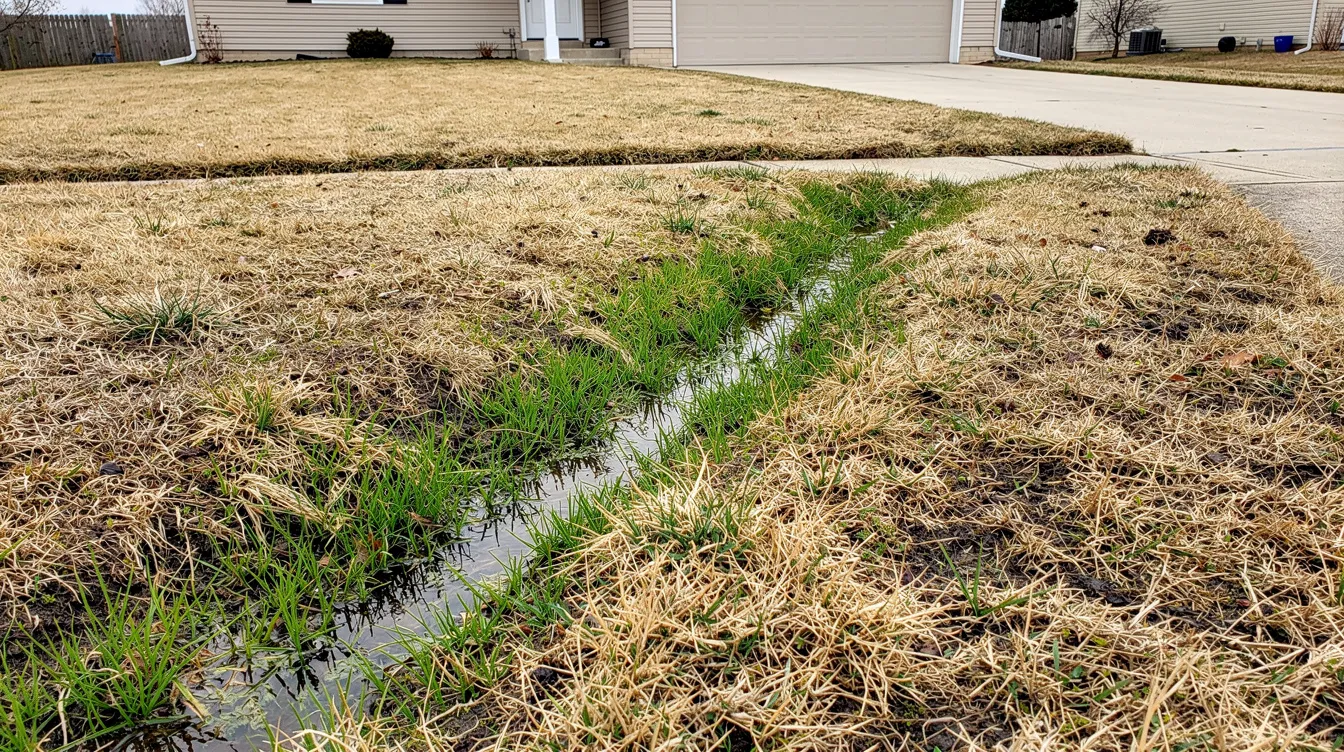
Look for these visual clues:
- A narrow soggy strip of lawn that stays wet even during dry summer weather
- Small sinkholes forming along a fence line or walkway
- A bright band of unusually green grass in an otherwise average lawn
- Pooling water in the yard without an obvious irrigation source
Sewage leaking underground acts like fertilizer-rich in nitrogen and bacteria that feed plant growth. In Western Washington’s shaded yards, this can also show up as thriving moss. Over time, constant leakage washes out soil and creates voids that lead to sinkholes and even foundation cracks. Soggy patches in the lawn can indicate a sewer line leak that’s been active for months. Sandy soil can increase the risk of sewer line collapse because it erodes faster around a leaking pipe, removing the structural support the pipe relies on.
Foundation cracks or sinkholes can occur due to soil erosion from a broken sewer line, and these surface signs often appear long before a complete collapsed sewer line event. This gives homeowners a window to plan for replacement rather than scrambling during an emergency.
Ready Rooter can use camera inspection and above-ground locating equipment to trace these yard symptoms back to the exact point of sewer line damage and advise whether a spot repair or full sewer line replacement is the smarter investment.
Pests, Rodents, and Insects Near Drains and the Foundation
A damaged sewer line doesn’t just leak water-it can create entry points and ideal conditions for unwanted visitors. Pest infestations can result from cracks in underground sewer pipes allowing entry for rats, mice, cockroaches, and drain flies seeking warmth, moisture, and food particles.
Watch for these patterns:
- Increased rodent activity around foundation vents or crawl space access points
- Insects emerging from basement floor drains
- Pest control companies repeatedly finding activity along the sewer line route near the property line
Pests alone don’t prove a broken sewer line, but pest problems appearing alongside foul odors, soggy soil, or recurring backups are a strong indication of collapsed pipes or a broken sewer underground. Sealing entry points without addressing the underlying sewer line damage won’t solve the root cause-the pests will find new ways in.
Ready Rooter’s inspection findings can help homeowners show pest control providers exactly where structural breaches in the underground pipes are located, so both problems get fixed together.
Age, Material, and Expected Sewer Line Lifespan
Even without dramatic symptoms, the age and material of your sewer line strongly influence whether you should budget for repair or replacement in the coming years. Aging sewer lines over 40–50 years old are prone to failure, and many homes in the Seattle–Bellevue area fall squarely into this risk zone. Sewer lines over 40–50 years old may need inspection even if no obvious symptoms are present yet.
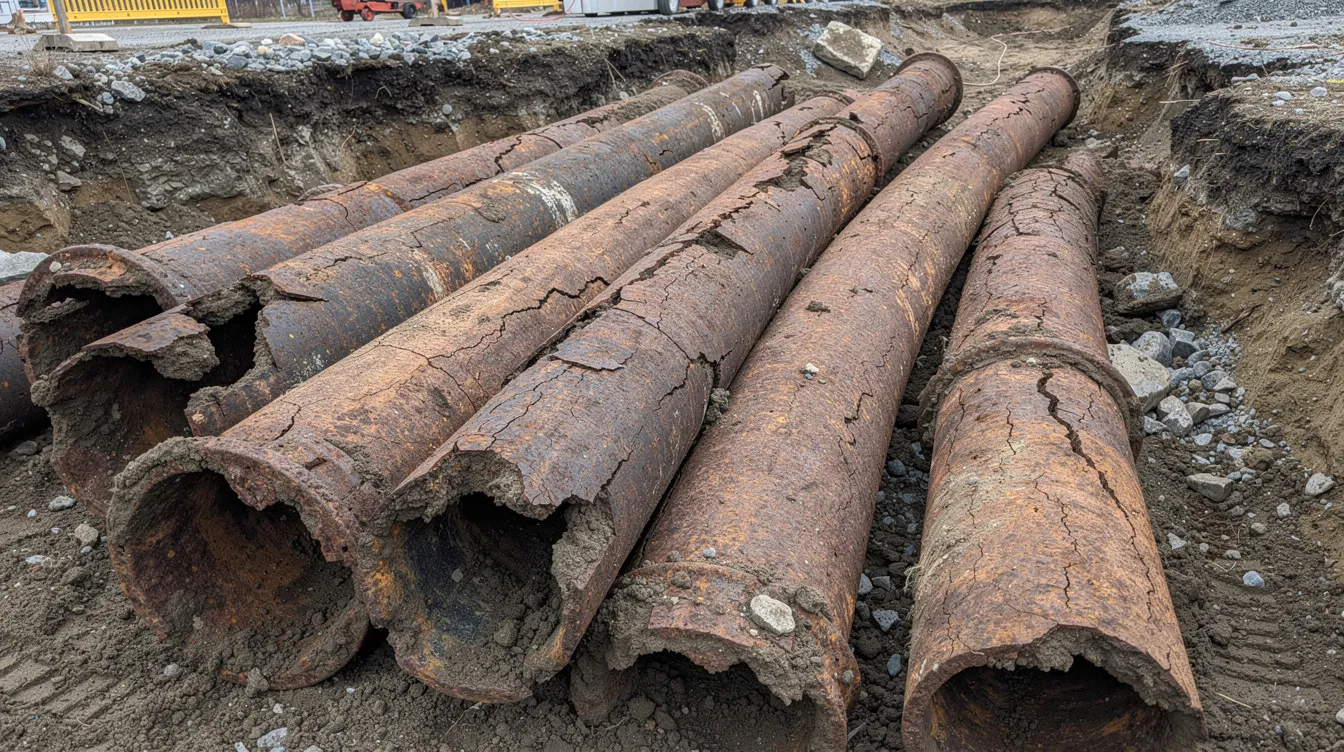
Here’s how common pipe materials compare:
| Material | Typical Install Era | Expected Lifespan | Common Failure Mode |
|---|---|---|---|
| Orangeburg (fiber) | 1940s–1970s | 30–50 years | Softens, deforms, collapses |
| Vitrified clay | Pre-1960s | 50–60 years | Root intrusion at joints, cracking |
| Cast iron | Up to 1970s | 50–100 years | Internal pipe corrosion, scaling, thinning |
| PVC / ABS | 1970s–present | 75–100+ years | Joint shifting, rare crushing |
| Cast iron pipes corrode over time, leading to sewer issues like reduced bore diameter and eventual wall failure. Tree root intrusion is a major cause of sewer damage, particularly with clay pipes where roots exploit gaps at every joint. Heavy surface loads-like vehicles parked repeatedly over a shallow pipe run-can crush sewer pipes, causing failures that only worsen with age. |
A practical rule of thumb: if your sewer line is over 50 years old and already showing early signs like repeated clogs, gurgling, or minor tree roots in the line, plan for replacement. Ready Rooter can identify pipe material and approximate age during a camera inspection and discuss a long-term plan-whether staged repairs or a full trenchless replacement-to prevent surprise failures.
When Can You Choose Sewer Line Repair, and When Is Replacement Inevitable?
Not every sewer line issue requires a full replacement. Sometimes a targeted sewer line repair handles the problem effectively. But there are clear thresholds where replacement becomes both safer and more economical.
Sewer line repair is usually enough when:
- A small, isolated crack or minor root intrusion affects one joint
- Hydro-jetting and spot-lining can address the issue
- A short offset exists at one joint, but the rest of the pipe is structurally sound
Sewer line replacement becomes inevitable when:
- Long sections show corrosion, scaling, or internal rust beyond cleaning
- Extensive tree root intrusion has penetrated multiple joints
- Repeated sewage backups continue after professional cleaning
- Major bellies trap solids and cause recurring sewer problems
- Fully collapsed sections or pipe collapse make lining impossible
- The pipe material is Orangeburg and showing deformation
- Ground shifting has displaced the pipe beyond realignment
Ready Rooter presents homeowners with side-by-side comparisons: the cumulative cost of repeated spot repairs and cleaning over the next 10 years versus a one-time replacement with a 50-year expected life. While replacement is a bigger upfront investment, it often eliminates emergency calls, interior foundation damage, and repeated disruption-especially in older Puget Sound homes where most sewer line problems trace back to aging infrastructure.
How Ready Rooter Diagnoses Sewer Line Damage in Bellevue and the Greater Seattle Area
Ready Rooter’s diagnostic approach starts with listening to homeowner symptoms, inspecting visible plumbing fixtures, and then deploying drain camera technology to see the sewer line’s condition from the inside. Video camera inspections diagnose sewer line conditions accurately, removing the guesswork from repair decisions.
The process works like this:
- A technician accesses the main cleanout (or creates one if needed)
- A waterproof camera advances through the pipe toward the city main
- The camera records video of cracks, roots, bellies, separated joints, and any collapsed sewer line sections
- Technicians mark problem spots above ground using locating equipment
This precise locating means excavation or trenchless work can be planned down to the foot, minimizing yard or driveway disruption. Ready Rooter offers 24/7 emergency response for sewage backups and can often perform same-day sewer line inspections in Bellevue, Redmond, Kent, Renton, and nearby communities.
Findings are shared clearly with homeowners-often on a tablet or USB video-so you can see exactly why repair or replacement is being recommended. No pressure, just evidence.
Modern Sewer Line Replacement Options (Including Trenchless Methods)
Homeowners today aren’t limited to ripping up their entire yard. Trenchless methods minimize excavation during sewer repairs, and in many cases can replace a failing sewer line with far less surface damage than traditional digging.
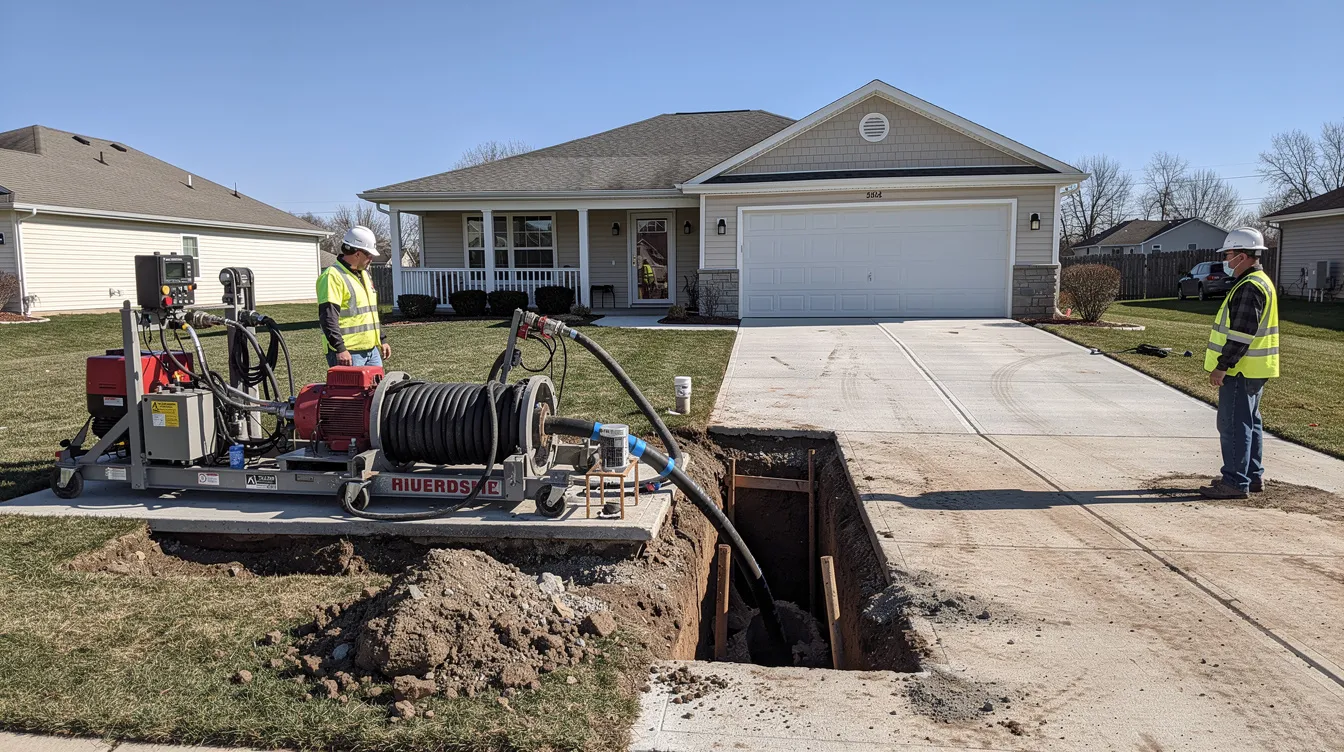
Here are the primary methods Ready Rooter uses:
- Pipe bursting replaces damaged lines by pulling new pipe through the same path while fracturing the old one. It works well for residential laterals in the 4–24 inch diameter range.
- Pipe lining (CIPP) creates a new pipe inside the old one using a resin-saturated liner that cures in place-ideal when the host pipe still holds its shape.
- Traditional excavation is necessary for completely collapsed pipes, severely off-grade sections, or complex connections where trenchless methods can’t correct alignment.
Trenchless options preserve landscaping, driveways, and patios. Open-cut excavation offers full control over slope correction and rerouting but involves higher restoration costs and longer timelines. You can learn more about comparing traditional and trenchless approaches to see which fits your situation.
All new installations use code-compliant materials like Schedule 40 PVC, designed to deliver decades of reliable sewer line lifespan and resist root intrusion. Ready Rooter handles permits, inspections, coordination with local utilities, and final cleanup-so you don’t have to manage separate contractors.
How to Reduce Future Sewer Line Problems After Repair or Replacement
Even a brand-new main sewer line can be stressed by improper use, poor landscaping decisions, or skipped maintenance. Protecting your investment starts with a few everyday habits.
What to keep out of your drains:
- Never flush wipes (even “flushable” ones), feminine products, paper towels, or dental floss
- Keep grease, cooking oils, and food scraps out of kitchen drains
- Avoid chemical drain cleaners-they can corrode sewer pipes over time
Landscaping precautions for Western Washington:
- Plant large trees and deep-rooted shrubs away from known sewer line routes
- Use root barriers where planting near lines can’t be avoided
- Avoid parking heavy vehicles over the pipe route repeatedly
Ongoing maintenance:
- Schedule sewer line inspections every 3–5 years for homes with pipes older than 40 years
- More frequent inspections if there’s a history of sewage backup or tree root intrusion
- Consider periodic hydro-jetting as a preventive measure through Ready Rooter’s hydro-jetting service
Ready Rooter also offers related plumbing services including drain and sewer services in Bellevue, sump pump repair, and whole-house repiping-services that complement sewer line work and help keep your entire plumbing system running smoothly.
FAQ: Sewer Line Replacement Signs and Next Steps
How do I know if my sewer problem is an emergency?
Active sewage backup into toilets, tubs, floor drains, or basements is always an emergency. Raw sewage causes rapid property damage and creates serious health hazards including bacterial contamination and mold. A strong sewage odor indoors-especially when combined with gurgling drains and slow fixtures-should also be treated as urgent, even if wastewater hasn’t overflowed yet.
If you’re in Bellevue or the Greater Seattle area and see standing sewage or repeated backups within a short period, call Ready Rooter’s 24/7 line immediately.
Can I use my plumbing while waiting for a sewer line inspection?
Minimize water use if you suspect serious sewer line damage. Avoid running laundry, dishwashers, and long showers, and flush toilets as little as possible. Continued heavy use can worsen sewage backups and push wastewater into finished spaces, dramatically increasing cleanup and restoration costs.
If backups are already occurring, stop all water use until a professional plumber has inspected the system and assessed the sewer line’s condition.
Does homeowners insurance usually cover sewer line replacement?
Standard homeowners policies typically do not cover normal wear and tear, pipe corrosion, or age-related sewer line failure outside the foundation walls. Some insurers offer optional “service line” or “sewer and water backup” endorsements that may help with certain types of sudden damage or interior cleanup costs.
Review your specific policy and speak with your insurer. Camera inspection reports from Ready Rooter can serve as documentation if you need to file a claim.
How long does a sewer line replacement usually take?
Straightforward trenchless replacements are often completed in 1–2 days once permits and utility locates are cleared. More complex excavation jobs might take 3–5 days depending on depth, length, and site conditions. In most cases, expect temporary water use restrictions during key phases, but Ready Rooter explains the schedule in advance and works to minimize downtime.
For larger projects, plan showers or laundry around the work schedule, or arrange temporary accommodation if you prefer not to be on-site during active work.
What’s the first step if I suspect my main sewer line is failing?
Start by documenting your symptoms: note where backups occur, how often, and under what conditions (rain, heavy water use, specific fixtures). Then schedule a professional sewer camera inspection. Ready Rooter can typically perform this inspection quickly across Bellevue and nearby cities, providing video evidence of any sewer line damage, root intrusion, bellies, or collapsed sections.
After the inspection, you’ll receive clear recommendations outlining whether short-term sewer repair, ongoing maintenance, or full sewer line replacement is the most cost-effective path forward-no guessing, no costly repairs you don’t actually need.
Share this post:


