


Your main sewer line works silently underground until something goes wrong. When it does, the symptoms can range from mildly annoying to genuinely hazardous. Knowing the sewer line replacement signs before a small crack becomes a basement full of wastewater can save you thousands of dollars, protect your family’s health, and spare your yard from becoming a construction site. Here’s what to watch for and when to act.
Key Takeaways
- Frequent backups, sewage backup at the lowest drain, foul odors, soggy or unusually lush patches in your yard, and foundation cracks are the most reliable warning signs that your main sewer line needs attention.
- Repeated sewer problems across multiple fixtures usually indicate a failing sewer line, not simple drain clogs.
- A sewer camera inspection is often the best method to identify internal pipe issues and confirm whether you need sewer line repair or full line replacement.
- Early action in the Bellevue and Greater Seattle area-calling Ready Rooter Washington at the first sign of trouble-can prevent emergency sewage backups and costly property damage.
- Modern options like trenchless sewer line replacement can fix many problems with significantly less digging and disruption than traditional excavation.
Why Sewer Line Health Matters for Bellevue & Greater Seattle Homes
Every fixture in your home-toilets, showers, sinks, washing machines-connects to a single main sewer line that carries wastewater from your home’s plumbing system to the city sewer system. This pipe, often called the “side sewer” or “lateral,” runs underground from your foundation to the public main under the street. When it’s working, you never think about it. When it fails, everything stops.
In the Puget Sound region, many homes built between the 1950s and 1980s still rely on original sewer pipes made from clay, cast iron, or Orangeburg (a bitumen-impregnated fiber material). Clay pipes typically last 50–60 years before failing. Cast iron pipes generally provide 50–75 years of service. Orangeburg pipes deteriorate within 30–50 years. If your home falls within these age ranges and the lateral has never been replaced, the pipe is approaching or past its expected lifespan.
Local conditions accelerate the problem. Seattle and Bellevue’s wet winters saturate dense, clay-rich soils, causing shifting that can push joints apart until they joints separate entirely. Large trees-maples, alders, cedars-send roots toward the moisture that leaks from aging joints, and tree root intrusion is the leading identified cause of sewer backups in older Seattle-area laterals. Steep lots compound everything: gravity pulls saturated soil downhill, stressing pipes that were trenched decades ago. Poor installation practices common in mid-century construction, such as improper bedding or slope, only add to the vulnerability.
Ignoring sewer line issues can lead to costly property damage. Sewer line damage progresses and does not heal itself-cracks widen, roots thicken, and bellied sections trap more debris with every flush. Ready Rooter Washington specializes in diagnosing and fixing sewer line damage for both residential and light commercial properties across Bellevue, Redmond, Renton, Kent, and surrounding cities through comprehensive drain and sewer services in Bellevue, WA.
1. Frequent Backups & Slow Drains Throughout the House
Frequent backups are the most common early signal that you’re dealing with a sewer line problem rather than a simple clogged drain. When multiple fixtures-toilets, tubs, showers, and floor drains-back up together or slow down every few months, the obstruction is almost certainly in the main sewer line, not in an individual branch.
One slow drain at a bathroom sink is usually a local issue: hair, soap scum, or minor grease buildup. But when you notice slow draining sinks on one level paired with slow drains or backups on another, the pattern changes. Common signs that indicate a sewer line may need to be replaced include multiple slow drains occurring simultaneously. Multiple slow drains typically point to a main sewer line issue rather than a localized clog.
In split-level and basement homes around Seattle, sewer line damage often shows up first at the lowest fixtures-the basement floor drain, a ground-floor shower, or a utility sink draining slowly while upper-level fixtures seem fine. That’s because wastewater hits the damaged section on its way out and has nowhere to go but back up.
If you’re calling for drain cleaning more than twice a year on the same line, it’s time to schedule a professional sewer line inspection with a camera rather than paying for another temporary fix.
2. Sewage Backup: When It’s More Than a Simple Clog
Raw sewage backing up into tubs, showers, or floor drains is one of the most urgent sewer line replacement signs. It means the main line is obstructed, collapsed, or so severely damaged that wastewater cannot reach the public main. Raw sewage can back up into your house if ignored, and the consequences are immediate and serious.
Sewage backups tend to appear at the lowest point in the home. A common trigger pattern: you run the washing machine or dishwasher upstairs, and minutes later, wastewater surfaces through a ground-floor shower or basement drain. This happens because the plumbing fixtures upstream push water into a main line that can’t handle the flow due to a sewer line clog, collapse, or severe root mass.
The health hazard is real. Standing wastewater introduces bacteria, viruses, and parasites into living spaces. Prolonged contact with damp materials triggers mold growth indoors, which can result from even short-term sewer line leaks. Flooring, drywall, and personal belongings exposed to sewage often require professional remediation.
Repeated sewage backups-especially after recent drain cleaning or snaking-strongly suggest the problem is structural. Delaying sewer repairs can lead to emergency situations and higher costs. If you see wastewater coming up from drains, stop using water immediately and call an emergency plumber like Ready Rooter Washington for 24/7 response or reach out directly through our contact our drain and sewer company in Bellevue page.
3. Foul Sewer Odors in the Home or Yard
Your sewer system is designed to be sealed. Vent stacks on the roof allow air pressure to equalize, but under normal conditions, sewer gas never reaches living spaces or the yard. Persistent sulfur or rotten-egg smells are not normal and shouldn’t be dismissed.
Common odor locations include areas around floor drains, basement corners, bathrooms, and outdoor zones along the sewer line path from the house to the street. Persistent sewage odors may indicate a crack or breach in the sewer line allowing gases-and moisture-to escape through surrounding soil.
How to tell the difference between a harmless dry P-trap and a cracked sewer line: run water in any fixture you haven’t used in a while to refill the trap’s water seal. If the sewer odor disappears, the issue was simply an evaporated trap. If it persists, you likely have a deeper problem. Foul odors around drains suggest a broken sewer line that needs professional attention.
A strong sewage smell near the home, especially along the lateral path in the yard, can indicate an exterior pipe failure. In Seattle’s drier summer months, when the ground isn’t waterlogged, these odors often become more noticeable because soil cracks open and allow gas to migrate upward. This is a strong cue to schedule a professional sewer line leak detection visit.
4. Soggy Spots, Sinkholes, or Unusually Lush Grass Above Sewer Lines
Leaking wastewater from a damaged sewer line changes soil conditions in visible ways, even during dry periods. Unexplained soggy or green patches in the yard can signal a leaking sewer line, and these signs of a broken pipe are among the easiest to spot from ground level.
Watch for these yard symptoms:
- Soggy patches that don’t dry out despite days without rain
- Small sinkholes or depressions forming along the pipe route
- Narrow bands of dark-green, fast-growing grass tracing the line from house to street
- Muddy or soft ground when the rest of the yard is firm
In older Bellevue and Seattle lots, sewer laterals typically run from the house toward the street or alley. Greener strips along this path are a textbook indicator. Escaping effluent acts like fertilizer at first, producing lush grass, but over time oversaturation kills vegetation, creates swampy mud, and attracts insects and rodents.
Soggy patches in your yard may indicate a sewer leak that’s actively eroding soil. Persistent soggy or sunken areas-especially patches in your yard that appear suddenly-should prompt a professional inspection before a small leak becomes a full collapse requiring emergency line replacement.

5. Gurgling Toilets, Bubbling Drains, and Strange Plumbing Noises
If you hear gurgling sounds coming from drains when you haven’t touched the fixture, air is being forced through water traps by a restriction somewhere downstream. These are often early warning signs of a main sewer line blockage or partial collapse.
Concrete examples of what this sounds like:
- Your toilet gurgles when you run the bathroom sink
- Bubbles appear in the toilet bowl after the washing machine finishes draining
- The bathtub drain makes gurgling sounds after you flush a toilet on the same level
These noises arise when partially blocked or bellied sections of the main sewer line trap air and slow water flow. As wastewater pushes past the restriction, pressure fluctuations force air back through P-traps in connected drains, producing the characteristic bubbling or “talking” sound.
Occasional gurgling in one fixture can be minor. But repeated or worsening noises across several fixtures-especially when combined with slow drainage, odors, or soggy soil-are a signal of bigger trouble. Homeowners should combine this symptom with others to decide whether a professional inspection is needed. For a deeper look at diagnosing these sounds, see our guide on how to diagnose main sewer line problems.
6. Interior Water Damage, Mold Growth, and Sewer Odor Indoors
Sewer line leaks inside or just under a concrete slab can create chronic moisture problems that develop slowly enough to escape notice until they’re serious. Mold growth indoors can indicate a leaking sewer line, even when there’s no obvious sewage backup at a drain.
Typical signs include:
- Unexplained damp or discolored spots on lower-level floors or walls
- Musty smells combined with sewer odor near bathrooms, laundry rooms, or utility spaces
- Peeling paint or warped baseboards at floor level
- Visible mold or mildew on walls or ceilings near plumbing runs
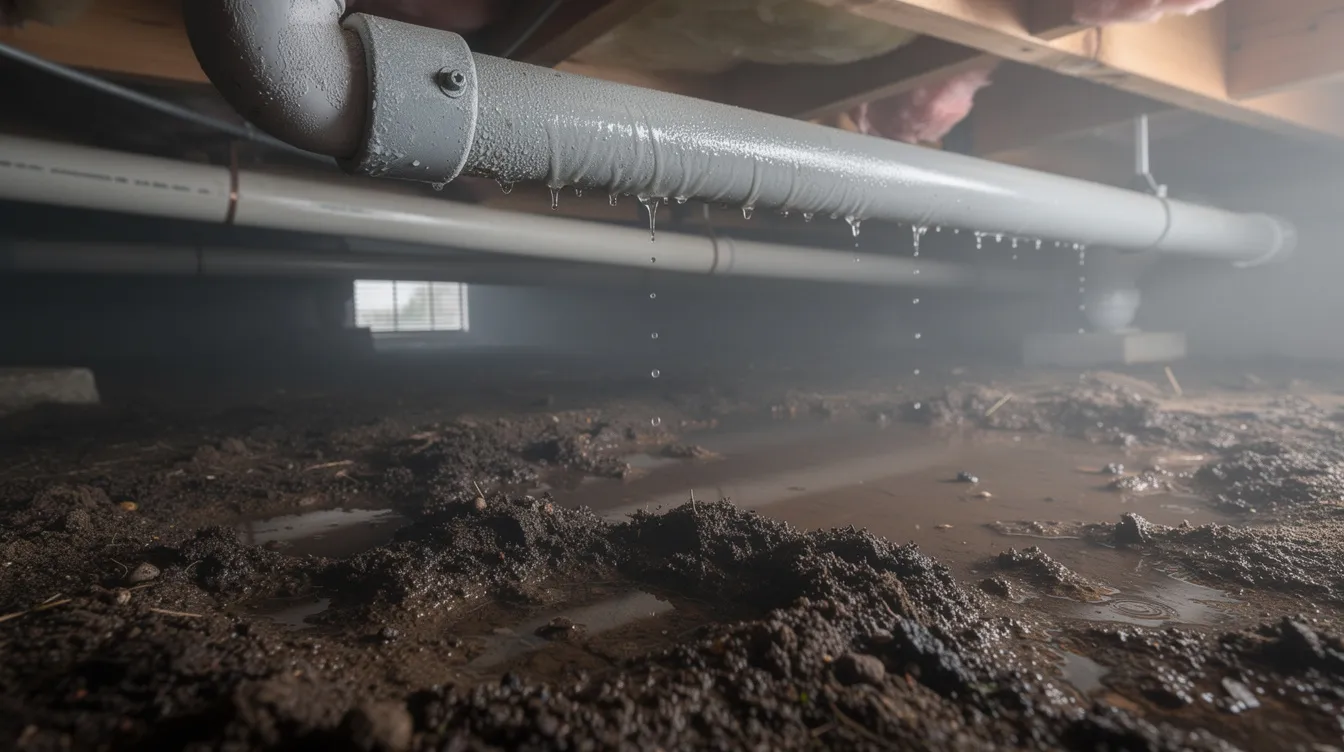
Slow leaks from broken lines under slabs or in crawlspaces saturate the surrounding soil and building materials gradually. You may not see standing water, but the persistent moisture feeds mold colonies that release spores harmful to anyone with allergies, asthma, or compromised immunity. Foundation cracks can also occur from untreated sewer line leaks as the soil beneath shifts.
When mold or dampness appears alongside sewer smells, DIY fixes like bleach or a dehumidifier only treat symptoms. A professional inspection with cameras-and, if needed, moisture detection tools-is the only way to find and fix the source.
7. Foundation Cracks, Shifting Soil, and Slab Problems
A leaking sewer line doesn’t just damage the pipe-it destabilizes the ground around it. Severe structural damage can cause foundation cracks or sinkholes when wastewater slowly washes away supporting soil beneath foundations and slabs.
Long-term leaks from a cracked sewer pipe erode the fill material that supports concrete. The result: settling, uneven floors, new diagonal cracks in interior walls, step cracks in foundations, and doors or windows that suddenly stick. Shifting soil beneath a slab can also cause the floor to dip or tilt noticeably in one direction.
Specific examples to watch for:
- Diagonal cracks appearing in drywall near bathrooms or laundry rooms
- Widening gaps between the slab and baseboards near plumbing lines
- Small sinkholes forming outside along the sewer line path
Not every foundation crack means a sewer line breaks beneath the house. But new or rapidly worsening cracks combined with sewer odors, slow drains, or soggy soil are a major red flag. When scheduling a professional inspection, mention any foundation changes so the camera operator can focus on likely problem areas and check for structural damage along the run.
8. Increased Pest Activity Around Drains, Crawlspaces, or Yard
Rodents and insects exploit openings in broken pipes to reach food, water, and shelter. Cracks in sewer pipes can attract rodents and insects looking for moisture-and once they find a reliable entry point, they establish routes into living spaces.
Warning signs include:
- Rats spotted near the foundation or in the crawlspace
- Cockroaches appearing around floor drains or basement fixtures
- Insect breeding in persistently damp spots in the yard
- Unexplained scratching sounds from crawlspaces near plumbing runs
A broken sewer pipe provides a steady source of warmth, moisture, and nutrients. Rodents, in particular, can travel through the sewer system and enter homes through pipe openings as small as a couple of inches.
Pest activity alone doesn’t confirm sewer line damage, but when combined with odors, soggy soil, or frequent backups, it strongly suggests a compromised main line. Coordinating pest control with plumbing diagnosis ensures that sealing sewer line openings cuts off the infestation at its source.
9. How Professional Sewer Line Inspection Confirms the Problem
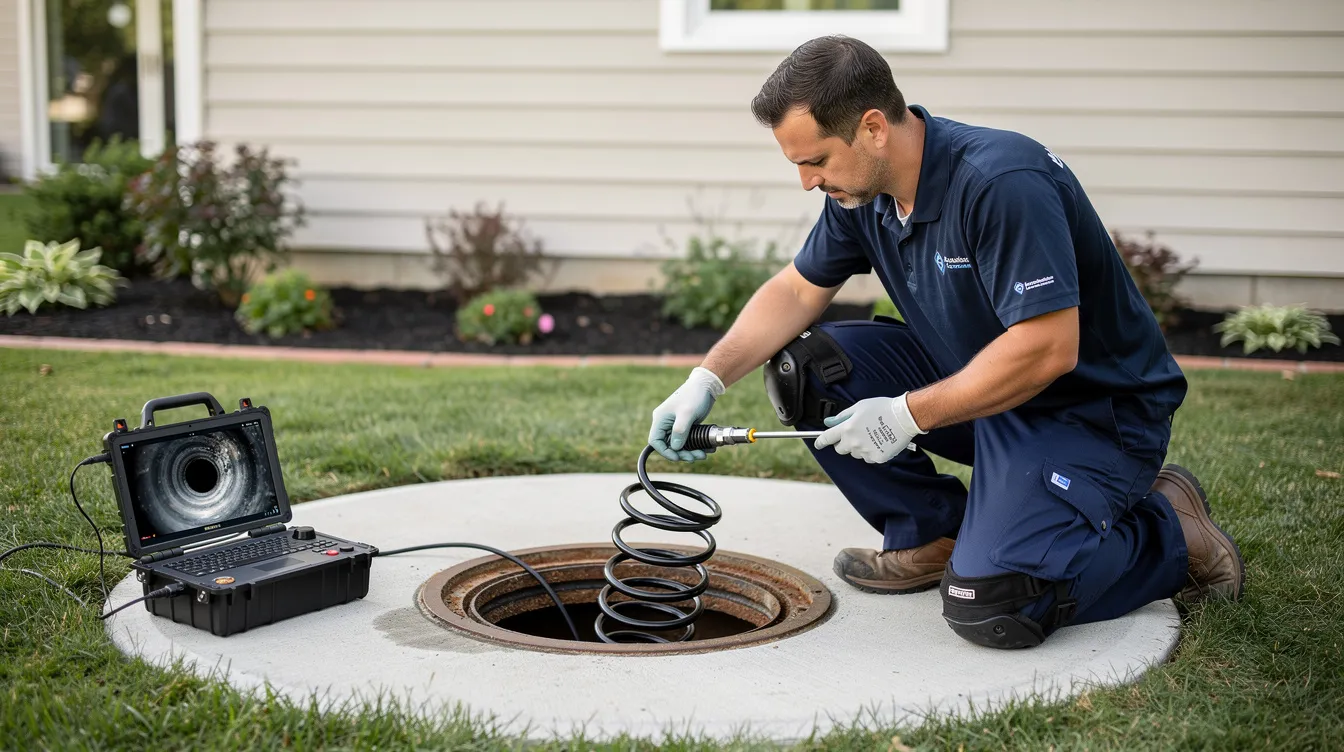
A professional sewer line inspection is the critical step between suspecting damage and knowing exactly what you’re dealing with. A sewer camera inspection removes guesswork and gives you visual evidence before committing to any repair or replacement plan.
Here’s how it works: a technician accesses the main cleanout (or excavates a small access pit) and feeds a high-definition waterproof camera on a push-rod through the entire main sewer line. The camera records video of every inch of the pipe wall, documenting cracks, root intrusion, offset joints, bellies, pipe cracks, and collapsed sewer line sections.
What the inspection reveals:
| Finding | What It Means |
|---|---|
| Root mass blocking 50%+ of pipe | Likely structural joint failure; replacement often recommended |
| Offset joints or separated connections | Soil movement or material degradation |
| Belly or sag in pipe | Low spot collecting debris; may need re-slope via replacement |
| Pipe material (clay, iron pipes, Orangeburg) | Determines remaining lifespan and repair options |
| Collapsed section | Full line replacement required in that zone |
| Professional inspections can identify cracks and root intrusion that are invisible from the surface. Video camera inspections are recommended for recurring drain issues because they pinpoint the exact location, depth, and severity of damage. Timely inspections prevent emergency repairs and higher costs. |
Ready Rooter Washington offers camera inspections across the Greater Seattle area, often with same-day or next-day availability for homeowners dealing with frequent backups or active sewage backups.
10. Sewer Line Repair vs. Full Line Replacement
Not every sewer line problem requires ripping out the entire lateral. Some localized issues can be repaired affordably, but widespread sewer line damage justifies full replacement. The right approach for your sewer line depends on what the camera inspection reveals.
When repair may be enough:
- A single small crack or isolated joint offset in an otherwise sound pipe
- Moderate root intrusion in one area with minimal structural compromise
- Minor grease buildup causing a sewer line clog that hasn’t damaged the existing pipe
When full replacement makes more sense:
- Multiple cracks, separations, or corroded sections across a long run
- Repeated sewage backups despite cleaning and jetting
- A long sagging “belly” section that can’t maintain proper slope
- Damaged sewer lines made of Orangeburg or severely deteriorated clay
- The pipe is past its expected service life
A professional plumber will walk you through the video footage and explain the options. For full line replacement, Ready Rooter Washington may recommend traditional excavation or trenchless methods like pipe bursting (fracturing the old pipe while pulling a new one through) or pipe relining with CIPP (cured-in-place pipe). Trenchless options typically cost $85–$150 per linear foot for lining and $100–$140 per foot for bursting, compared to $180–$250+ per foot for open-trench work that requires driveway or landscape restoration.
The total cost of sewer line repair or replacement in the Seattle area ranges widely:
| Method | Typical Cost Range |
|---|---|
| Spot repair | $1,950–$8,800 |
| CIPP trenchless lining | $7,000–$21,000 |
| Full replacement (trenchless or open) | $13,000–$41,600 |
| Camera inspection | $250–$500 |
| Whether the work crosses a property line into the public right-of-way also affects cost and permitting. A trustworthy plumber will help plan the project to minimize disruption and protect landscaping. |
11. Why You Shouldn’t Ignore Early Sewer Line Replacement Signs
Sewer line damage rarely plateaus. Cracks widen. Roots grow thicker every season. Shifting soil pushes joints further apart. What starts as occasional slow drainage can escalate into a full sewage backup that floods a basement.
The cost escalation is dramatic. Early issues might be handled with a planned spot repair or pipe relining for a few thousand dollars. Delay until the pipe collapses and you’re facing emergency after-hours rates, extensive interior water-damage restoration, mold remediation, and potentially foundation repair. Ignoring sewer line issues can lead to costly repairs that dwarf the price of proactive replacement.
Temporary fixes don’t solve structural problems. Repeated snaking or chemical drain cleaners treat symptoms but do nothing to seal the openings that caused root intrusion in the first place-and harsh chemicals can further damage aging pipe materials. Busted sewer lines won’t get better with time, and every flush pushes them closer to catastrophic failure.
Homeowners in Bellevue and surrounding cities should treat recurring clogs, sewer odors, or soggy soil as prompts to schedule a professional inspection. The inspection itself costs a fraction of what emergency work demands, and it gives you time to plan, budget, and choose the best method for your situation.
12. How Ready Rooter Washington Helps With Sewer Line Damage & Replacement
Ready Rooter Washington is a local, full-service plumbing, drain, and sewer company in Bellevue, WA serving Bellevue and the Greater Seattle / Puget Sound region. We handle everything from diagnosis through final restoration, so you don’t need to coordinate between multiple companies.
Relevant services for sewer line issues:
- Drain cleaning and hydro-jetting to clear immediate blockages
- Sewer camera inspections for definitive diagnosis
- Trenchless sewer line repair and replacement (pipe bursting and CIPP lining)
- Spot repairs and full main sewer line replacement via traditional excavation
- 24/7 emergency service for urgent problems like standing sewage, active backups, or complete blockages
After sewer line work, you may also need related services such as sump pump repair, whole house repiping, water heater services in Bellevue, WA, or main water service repair-all available through a single team.
If you’re experiencing frequent backups, foul odors, soggy yard spots, or foundation cracks, call Ready Rooter Washington or book online for a professional sewer line inspection. Catching problems early is always less expensive-and less stressful-than dealing with a full-blown sewer emergency.
FAQ: Sewer Line Replacement Signs
Below are answers to common questions homeowners ask when they suspect their main sewer line needs attention.
How quickly should I call a plumber if I notice sewage backup?
Visible sewage backup is an emergency. Stop using all water in the home immediately-no flushing, no laundry, no dishwasher-and call for 24/7 emergency service the same day. Raw sewage contains harmful pathogens, and every minute of standing sewage increases contamination, material damage, and health risks. Ready Rooter Washington offers round-the-clock response across the Greater Seattle area.
Does one slow drain always mean a broken sewer line?
Not necessarily. One slow drain at a single fixture-like a bathroom sink-is usually a localized clog caused by hair, soap, or minor grease buildup. However, when several fixtures slow down or back up together, especially on the lowest level of your home, it’s much more likely a main sewer line problem. Scheduling a camera inspection at that point is the fastest way to know for sure.
Can I still live in my home during sewer line replacement?
In most cases, yes. Trenchless methods often take one to two days, and even traditional excavation typically wraps up in three to five days. You’ll have limited or no use of plumbing during key phases-your contractor should provide a clear schedule so your family can plan around short-term water and sewer shutdowns. Some homeowners arrange to use a neighbor’s facilities or a portable unit for the brief window when service is off.
Will my homeowner’s insurance cover sewer line replacement?
Coverage varies. Typical policies often exclude wear and tear, corrosion, and root intrusion-the most common causes of sewer line failure. Some policies may cover sudden, accidental damage (like a pipe crushed by heavy equipment). Ask your insurer about “service line” or “sewer and drain” endorsements, which can add coverage for underground utilities. Regardless, preventive maintenance and early inspection cost far less than emergency repairs that fall outside policy limits.
How often should I schedule a professional sewer line inspection?
For homes over 40 years old, or properties with frequent backups or mature trees near the lateral, inspections every two to five years are a smart investment. If you’re buying a home, insist on a sewer scope as part of your due diligence-especially in Bellevue and Seattle neighborhoods with older housing stock. A local plumber familiar with regional pipe materials and soil conditions can advise on the right interval for your property. Even homes connected to a septic tank rather than a city main benefit from periodic camera inspections to catch problems before they escalate.
Share this post:


