


A backed-up shower drain is more than an inconvenience. Left undiagnosed, it can lead to hidden leaks, structural damage, and expensive emergency repairs. This guide covers everything homeowners and property managers in the Puget Sound area need to know about shower drain camera inspections, from how the technology works to when you should call a professional.
Key Takeaways
A shower drain camera is a specialized waterproof camera used for plumbing inspections. It’s a small, LED-lit device fed down the shower drain on a flexible cable, allowing a technician to locate clogs, cracks, broken joints, and hidden leaks without tearing out tile or flooring. Drain cameras transmit real-time video to identify blockages and pipe damage, giving homeowners a clear picture of what’s happening inside pipes they can’t otherwise see.
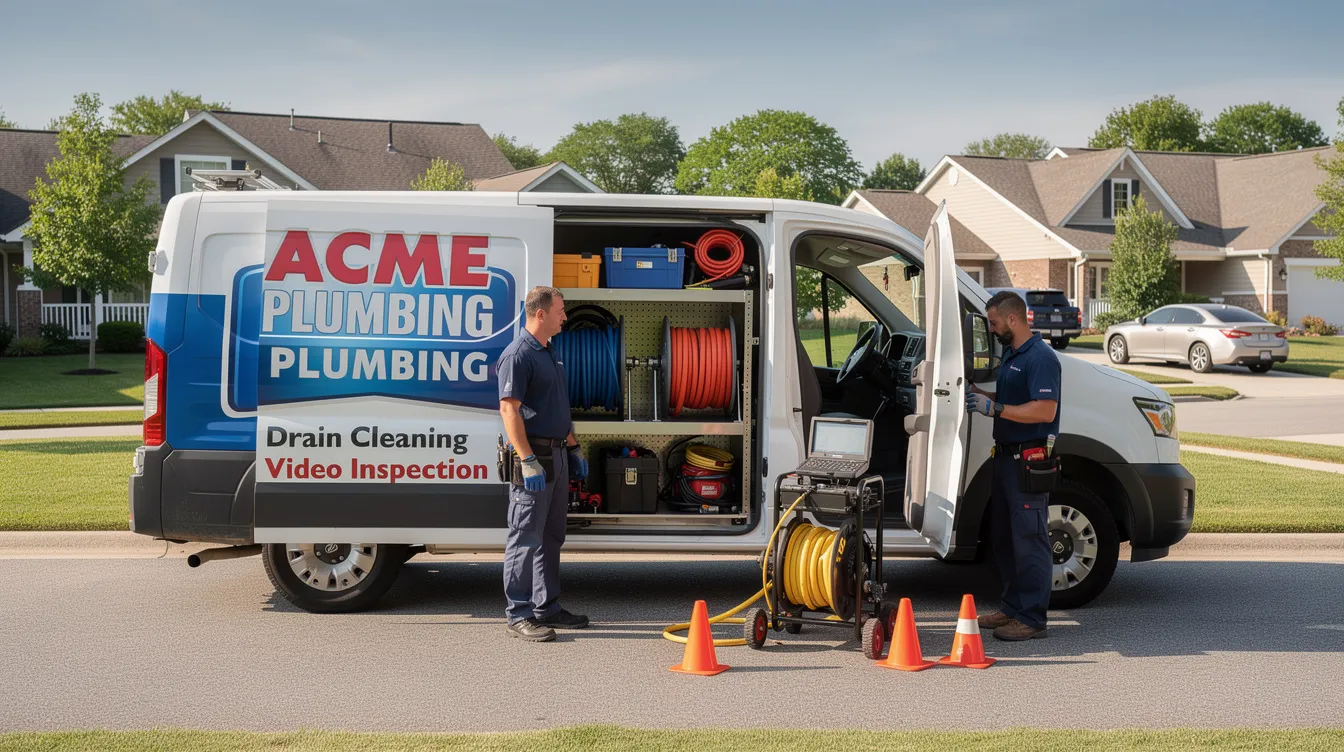
Ready Rooter Washington uses professional-grade inspection cameras every week across Bellevue, Redmond, Renton, Kent, and the greater Seattle area to quickly diagnose shower drain and sewer problems. Our technicians carry camera equipment on every service truck so diagnosis can happen on the first visit.
Camera inspections save money by pinpointing the exact problem location, which prevents guesswork, repeat clogs, and unnecessary demolition. If you’re dealing with recurring slow drains, sewage smells coming from the bathroom, unexplained water damage near the shower, or a botched DIY drain cleaning that made things worse, it’s time to call for a shower drain camera inspection.
Ready Rooter Washington offers 24/7 emergency availability through our drain and sewer services in Bellevue and the Greater Seattle area. Call us or book online for same-day shower drain camera service.
What Is a Shower Drain Camera (and How It Works)?
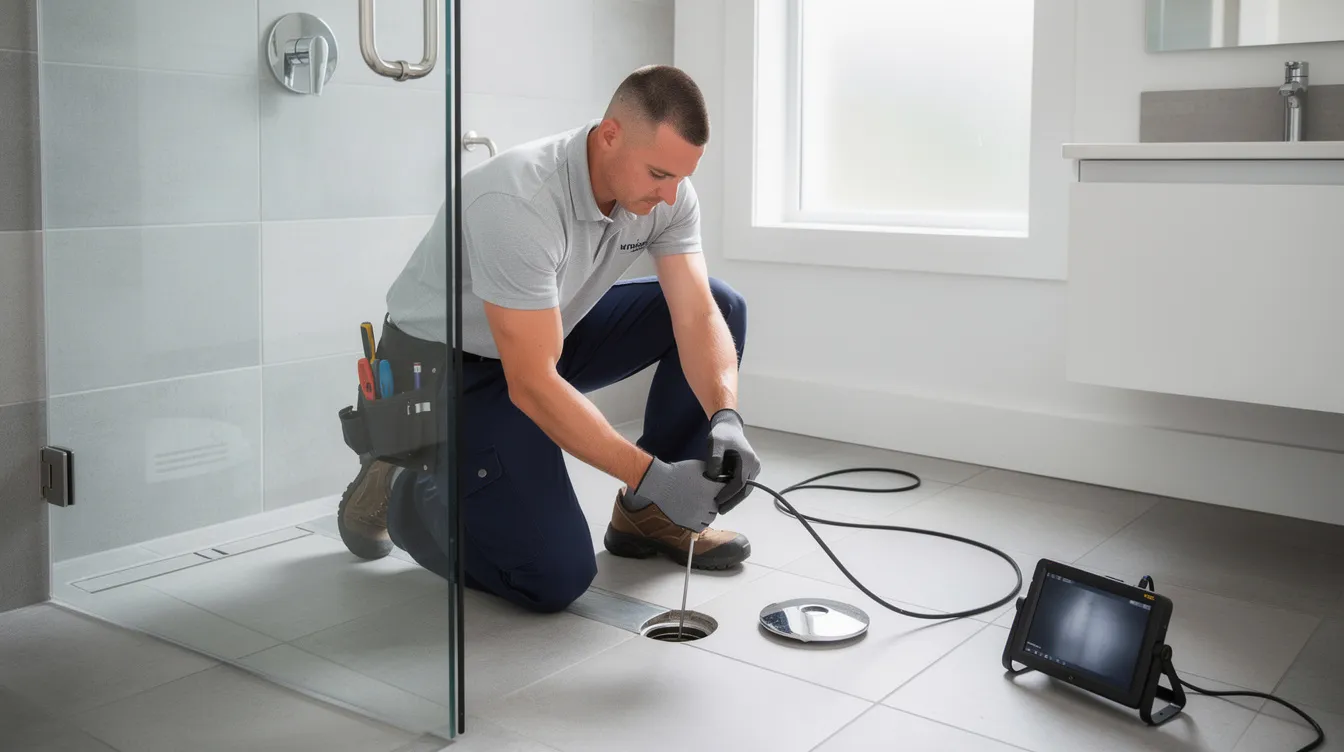
A shower drain camera is a flexible cable with a tiny, waterproof, LED-lit video camera on the end. It’s designed to travel through the inside of shower drainpipes and the connected branch lines, capturing live video that a technician watches on a monitor.
The basic components are straightforward:
- Camera head: a small waterproof lens surrounded by LED lights, sized to fit inside residential drain pipes.
- Push cable: a semi-rigid, reinforced cable (fiberglass or steel-braided) that guides the camera through bends and traps.
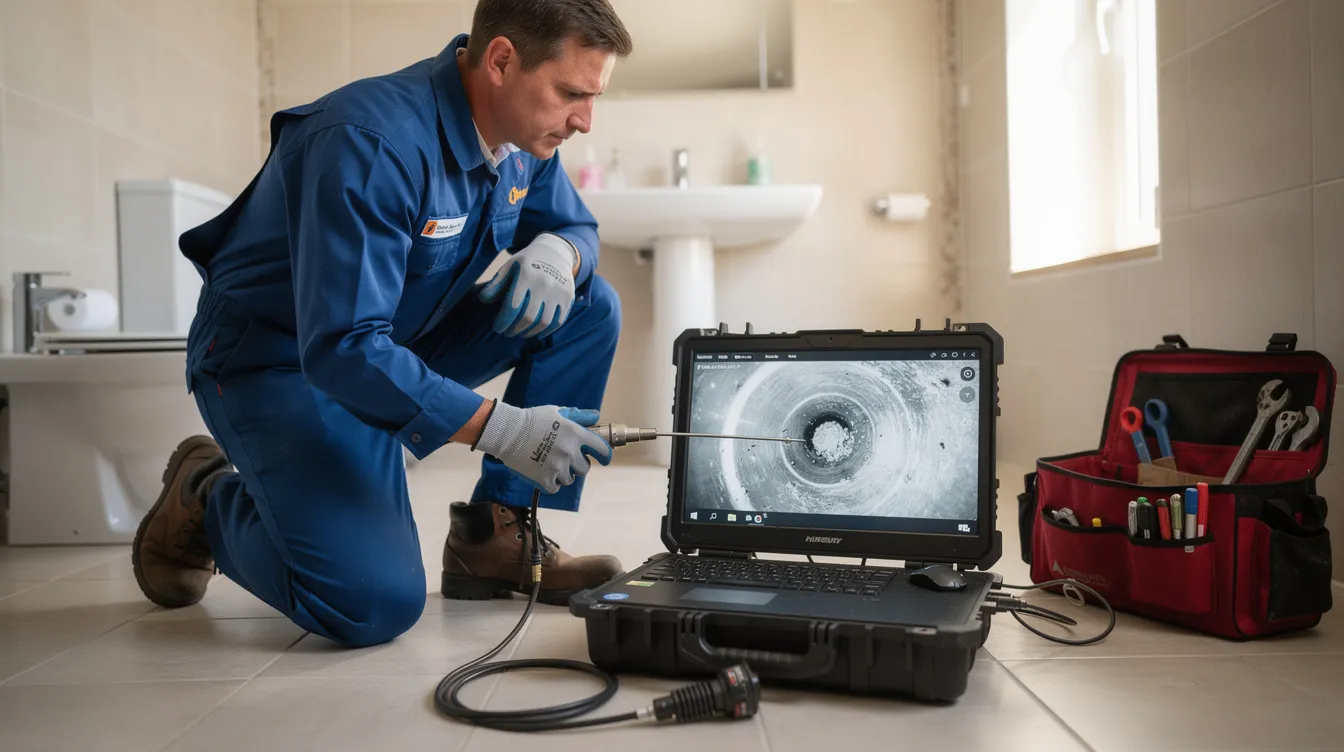
- Monitor and recording unit: displays the live video feed and can capture stills or record clips for documentation.
- Locator (sonde): a small transmitter in the camera head that sends a signal to the surface, letting the technician mark exactly where the camera is sitting beneath floors or concrete.
Hand-held inspection cameras save time and money during inspections by allowing technicians to diagnose problems on the spot. The process is simple: the technician removes the shower drain cover, feeds the camera into the pipe, watches the live feed, and records footage of anything notable.
In Puget Sound homes, the pipes being inspected are typically 1½- to 2-inch PVC or ABS plastic in newer construction, with older cast iron or occasionally galvanized steel in homes built before the 1970s. Camera heads are selected to match these diameters.
Unlike a full sewer camera inspection that traces a line from the house to the city main, a shower drain camera focuses on the P-trap and immediate branch line. Both are part of a broader family of inspection cameras used by plumbers for sinks, toilets, and main sewer lines.
Why Use a Camera for a Shower Drain Problem?
Traditional “blind” drain clearing treats symptoms, not causes. A plumber can snake through a clog and restore flow, but that doesn’t explain what caused the blockage or whether the pipe itself is damaged. Without a camera, the same problem often comes back within weeks.
A camera inspection helps homeowners understand the exact problem and necessary repairs. The core benefits include:
- Precise diagnosis: the camera shows hair clogs, soap scum buildup, dropped objects like razors or bottle caps, offset joints, and pipe cracks.
- Exact location: paired with a locator, the technician can mark the surface directly above the problem to within a few inches, making any necessary repair targeted and efficient.
- Less demolition: using a drain camera reduces the need for invasive exploratory digging. Instead of cutting open multiple sections of flooring or wall, work is focused only where it’s needed.
- Prevention: early signs of corrosion, root encroachment, or pipe sag show up on camera long before they cause a catastrophic failure.
In a Bellevue condo complex, for example, a shower that had been slow-draining for months turned out to have a shampoo bottle cap lodged in the P-trap. The camera found it in minutes. In a 1960s Renton home, a camera revealed a misaligned ABS joint under a tiled shower pan, the result of a previous DIY remodel that had been slowly leaking into the subfloor.
Camera inspections provide documentation for insurance and repair planning, which is especially valuable for property managers who need approval before authorizing work and for real estate buyers who want a clear record of pipe condition during home inspections.
A shower drain camera inspection is non-invasive, usually completed in under an hour, and often combined with same-visit cleaning or repair.
Common Shower Drain Issues a Camera Can Reveal
Cameras “see” what other tools can only feel. Here are the specific types of issues that show up on a drain camera’s live feed.
Hair and Soap Buildup
Long hair wraps around fittings and trap walls, creating a net that catches soap residue, body oils, and other debris. Over time, the buildup narrows the pipe significantly. Cameras can pinpoint clogs caused by hair, debris, or foreign objects, revealing exactly where the worst accumulation sits. Early warning signs include slow draining, standing water in the shower pan, and gurgling sounds after the water shuts off.
Foreign Objects
Seattle-area plumbers regularly find razor heads, dental floss, small toys, shampoo caps, and even jewelry lodged inside shower branch lines. A camera helps locate these objects so they can sometimes be retrieved with specialized tools instead of cutting into the pipe.
Pipe Defects and Age-Related Damage
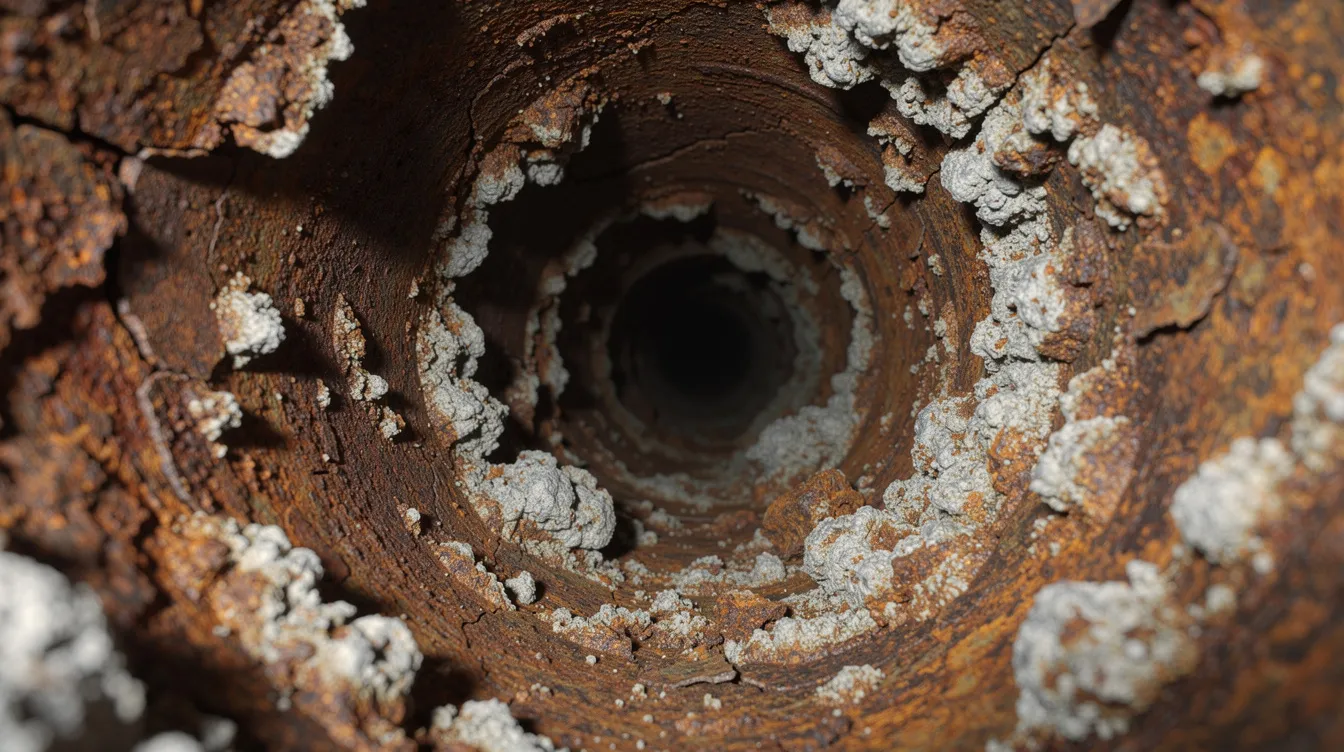
Inspection cameras can detect cracks and corrosion in pipes that are invisible from the outside. Older cast iron lines in Puget Sound homes commonly show interior scaling that can reduce the pipe’s usable diameter by 30–50%. Cracks from settling are common in slab homes built between the 1960s and 1990s, and offset or slipped joints frequently appear at couplings, especially where previous remodels disturbed the original plumbing.
Improper Installations
A camera will reveal horizontal runs with insufficient slope, sometimes called a “belly,” that allow standing water to collect under the shower. Wrong pipe materials or fittings used during remodels that don’t meet current code also show up clearly.
Root Intrusion and Mainline Issues
Tree roots can intrude and cause blockages in underground plumbing systems. While roots rarely invade a short shower branch line, a camera often reveals that the “shower problem” is actually occurring in the downstream sewer line, where roots infiltrate clay or concrete mains. This distinction changes the entire repair strategy.
DIY vs Professional Shower Drain Camera Inspections
Inexpensive phone-based drain scope cameras are widely available online, and many homeowners are tempted to diagnose drains on their own before calling a plumber.
What DIY Cameras Offer
Consumer-grade cameras typically connect via USB or Wi-Fi to a smartphone, have cable lengths of 10–25 feet, offer minimal LED lighting, and produce lower-resolution images. Some handheld models like the Gen-Eye Micro-Scope3 features a 7-inch color LCD screen and includes an 8 GB flash drive for recording videos and photos. The camera’s probe rod is 3 feet long for hard-to-reach areas, and the display resolution of the Gen-Eye Micro-Scope is 320×240. These can work for a quick peek near the drain opening or for non-critical curiosity checks.
What Professional Cameras Offer
Professional drain cameras are typically higher resolution than consumer models and built for demanding field conditions. They feature:
- Self-leveling camera heads that keep the image oriented correctly
- Bright, adjustable LED lighting for clear footage in any pipe material
- Onboard distance counters and locating transmitters for surface marking
- Durable, longer push cables designed for branch and mainline work
For reference, Milwaukee cameras are commonly used for 120-foot inspections in branch and lateral lines, while Ridgid cameras can reach up to 300 feet for full sewer scope work. Each model is selected based on the pipe diameter and the length of the run.
Risks of Going DIY
The most common problems include getting the camera cable stuck in tight bends or rough pipes, misinterpreting normal fittings as cracks, and missing serious issues further downstream because consumer cables are too short. A homeowner who concludes “it looks fine” after a 10-foot peek may be ignoring a collapsed section at 40 feet.
A DIY look is acceptable for very shallow hair clogs near the drain opening. For recurring backups, foul odors, visible water damage, or older cast iron lines, Ready Rooter Washington strongly recommends a professional inspection. We provide accurate, actionable reports with repair recommendations and upfront pricing, not just a video.
How Ready Rooter Washington Performs a Shower Drain Camera Inspection
Here’s what a typical visit to a Bellevue or Redmond home looks like when a shower is slow-draining or fully backed up.
Step 1 – Initial assessment. The technician asks about the history: how long the problem has persisted, how often it recurs, and whether other drains are affected. A visual check of the bathroom, drain cover, and any visible water damage follows.
Step 2 – Access and preparation. The shower drain grate is removed, and nearby surfaces are protected with drop cloths or mats. The technician selects the correct camera head and cable length based on the estimated pipe run and material.
Step 3 – Running the camera. The inspection camera is fed slowly into the shower drain. The technician narrates findings for the homeowner when possible, and both can view the live feed on the monitor. Pipe material, condition, and distance readings are noted throughout.
Step 4 – Diagnosis and documentation. Still images or video clips of key findings are captured, including blockages, cracks, offsets, or bellies. Everything is explained in plain English, and questions are answered on the spot. Files can be stored on a portable flash drive or uploaded to a secure server for sharing.
Step 5 – Solution on the same visit. When possible, camera inspection is combined with drain cleaning via snaking or hydro-jetting. If repairs are needed, such as an under-slab leak, the technician provides clear options: localized repair, section replacement, or a full sewer camera inspection if the problem extends further downstream.
Shower Drain Cameras vs Full Sewer Camera Inspections
Both tools are inspection cameras, but they answer different questions and cover different scope of work.
Shower-Only Inspection
This focuses on the shower’s P-trap and immediate branch line, typically covering 5–30 feet of pipe. It’s ideal when only the shower is affected and every other fixture in the house drains normally.
Full Sewer Camera Inspection
A full scope traces the line from the house cleanout all the way to the city main or septic tank, often covering 50–150 feet or more. This is the right tool when multiple fixtures back up, toilets gurgle, or sewage appears in floor drains or tubs.
Equipment Differences
Mainline sewer scopes use larger-diameter camera heads, longer and stiffer push rods, and more intensive locating and mapping. The technician may need to trace the line path through the yard or under a driveway.
How to Decide
Start with a shower drain camera if you have a single slow shower in a condo or upper-floor bathroom. Ready Rooter Washington will recommend stepping up to a full sewer camera inspection if we find repeated backups, mature trees growing over the sewer line, or older clay and concrete mains common in Seattle and Tacoma-area neighborhoods.
We perform both types of inspection as part of our broader drain and sewer services in Bellevue, WA and advise on the most cost-effective diagnostic path for your situation.
Integrating Camera Inspections with Drain Cleaning and Hydro-Jetting
A camera alone doesn’t clear a clog. It works best as a diagnostic partner alongside mechanical cleaning methods like snaking or hydro-jetting.
Before Cleaning
The camera identifies the clog’s nature (soft sludge vs. hard blockage vs. structural damage) and its exact location. This lets the technician choose the right tool and approach instead of working blind.
During Cleaning
For tough or unusual clogs, the technician may alternate between cleaning and re-scoping to check progress in real time. This prevents over-cleaning, which risks pipe damage, and ensures nothing is missed.
After Cleaning
A final camera pass confirms the line is clean, verifies water flows freely, and gives the homeowner a clear “after” view of the restored pipe condition.
Hydro-Jetting Specifics
High-pressure water jetting is used in main and branch lines for heavy grease, soap, and scale buildup. The camera is critical before jetting: it confirms the pipe is structurally sound enough to handle full pressure. A cracked or severely corroded pipe could be further damaged by jetting if the condition isn’t identified first.
This same camera-plus-cleaning approach is standard for professional drain cleaning and clearing for kitchen drains, main sewer lines, and commercial applications like apartment buildings and restaurants. Ready Rooter Washington uses this integrated method across all drain and sewer services.
When a Shower Drain Camera Inspection Is Essential
Some situations call for a camera inspection immediately rather than another round of home remedies.
High-Priority Scenarios
- Recurring clogs in the same shower within weeks or months, even after snaking or chemical cleaners. Sewer cameras can help identify issues causing recurring clogs that simple cleaning can’t resolve.
- Strong sewage or musty odors coming from the drain, especially in basements or lower levels.
- Sudden stains or soft spots on ceilings or walls below a second-floor bathroom.
- Slow drainage affecting both a shower and nearby fixtures (toilet, sink) at the same time.
Post-Remodel Inspections
Ready Rooter Washington recommends a camera check after shower or bathroom remodels, especially when drains were relocated or a slab was cut and re-poured. The inspection validates that new piping was installed with proper slope and secure joints, catching problems before tile, grout, and finish work seal everything away.
Property Sales
Buyers increasingly request drain and sewer camera reports as part of inspections for older Seattle-area homes. A documented clean bill of health for shower and sewer lines strengthens a seller’s position and can prevent last-minute negotiation surprises.
If you’ve already spent money on multiple “simple” cleanings with no lasting fix, a camera inspection is overdue.
Costs and Value of Shower Drain Camera Inspections
Exact pricing varies, but a camera inspection is usually a small fraction of what major water damage or unnecessary demolition would cost.
Typical Cost Factors
| Factor | Impact on Price |
|---|---|
| Scope of inspection | Single shower vs. multiple fixtures or full sewer |
| Accessibility | Basement cleanout vs. slab-on-grade vs. second floor |
| Pipe material and condition | Modern PVC vs. fragile cast iron or clay |
| Time of service | Standard business hours vs. after-hours emergency |
| In the Puget Sound area, basic residential camera inspections typically run between $230 and $500, with full sewer scopes potentially higher depending on length and complexity. |
Where the Real Value Lies
- Avoiding trial-and-error repairs that involve cutting open multiple sections of floor or wall.
- Catching leaks early before they rot framing, drywall, or subflooring.
- Getting a clear repair plan with an accurate estimate instead of open-ended hourly work.
Ready Rooter Washington may offer bundled pricing when combining camera inspection with qualifying drain cleaning or sewer repair. Veteran and senior discounts may also apply, depending on current promotions.
Customers receive more than just a video. They get professional interpretation of findings and prioritized next steps, which helps with budgeting and long-term planning. Contact Ready Rooter for a specific quote based on your location and situation in the Greater Seattle and Puget Sound area.
How to Choose the Right Plumber for Camera Drain Inspections
Not all plumbers own professional inspection cameras or have experience interpreting what the footage shows. Choosing the right provider matters.
Key Criteria
- Proper licensing and insurance in Washington State.
- Proven experience with camera pipe inspection, not just basic snaking.
- Ability to provide video or image documentation upon request (files can be shared via http links, email, or portable drive).
- In multi-unit buildings, the plumber should coordinate with property management and obtain permission from the building owner or HOA before accessing shared lines.
Why Local Expertise Matters
A plumber familiar with Bellevue, Redmond, Renton, and Kent neighborhoods understands the common pipe materials, typical home ages, and local building codes. They know that a 1970s split-level in Renton probably has cast iron drains, while a 2015 townhome in Redmond is running ABS or PVC.
Questions to Ask
- “Do you use inspection cameras for shower drain diagnostics?”
- “Can you show me the footage and explain what we’re seeing?”
- “If you find a problem, can you perform the repair in-house, including trenchless options if appropriate?”
Ready Rooter Washington checks every box: 24/7 emergency response, full-service capability (drain cleaning, hydro-jetting, sewer repair, repiping, water heaters), and transparent, upfront estimates. Look for consistent online reviews mentioning camera inspections, clear communication, and clean job sites.
Beyond Showers: Other Places We Use Inspection Cameras
The same inspection cameras used for shower drains are critical diagnostic tools throughout a home or commercial property.
Kitchen and Laundry Drains
Grease and food debris in kitchen lines and lint plus detergent buildup on laundry standpipes are common problems that a camera can quickly diagnose and scope before cleaning.
Toilets and Branch Lines
Recurring toilet clogs caused by foreign objects, tree roots deeper in the line, or collapsed downstream sections are verified and located with a camera. In multi-story buildings, cameras help assess the condition of older cast iron stacks.
Main Sewer Lines
Full-length sewer scopes run from cleanouts to the city main or septic tank, identifying root intrusion, bellies, joint separation, and improper previous repairs.
Commercial and Multi-Unit Properties
Apartment complexes, hotels, and restaurants with heavy drain usage benefit from routine preventive camera inspections. These inspections document line condition for maintenance planning, budgeting, and as a reference for future work.
Ready Rooter Washington treats inspection cameras as everyday diagnostic tools, not upsell gadgets. They’re standard equipment on our trucks and used in many service calls as part of delivering complete, honest plumbing work.
When Camera Findings Lead to Bigger Repairs (and How We Handle Them)
Sometimes a shower drain camera uncovers problems beyond a simple clog. A cracked under-slab pipe, severe cast iron corrosion, or a collapsed section can turn a routine inspection into a repair conversation.
Typical Next Steps
When serious issues are found, the inspection is often expanded to adjacent fixtures or the main sewer line. A locator is used to mark the exact repair point on the floor, wall, or yard so excavation is targeted and minimal.
Localized Repair Options
- Small-area demolition of tile or slab to access and replace a damaged pipe section.
- Use of transition fittings (such as fernco or shielded couplings) when tying modern PVC or ABS into older cast iron or clay lines.
Larger-Scale Solutions
- Sectional sewer replacements when damage extends beyond the immediate shower area.
- Trenchless repair options like pipe bursting and sewer pipe lining, when the affected line’s condition and layout allow it.
Ready Rooter Washington provides clear explanations, photos, and written estimates so homeowners understand the scope and cost before any work begins. Video documentation from the inspection, which can be stored on a portable drive or uploaded to a secure edgesuite delivery platform for easy sharing, serves as a visual reference for the repair plan.
Catching these issues with a camera early almost always results in lower long-term repair costs and less disruption than waiting for a catastrophic failure like a sewer backup or flooded bathroom.
Preventive Maintenance: Keeping Your Shower Drain Clear After Inspection
Even after a thorough cleaning and camera inspection, daily habits and regular maintenance determine how long a shower stays problem-free.
Practical Tips
- Install a quality mesh or silicone hair catcher over the drain and clean it weekly.
- Avoid flushing oily or clay-based skincare products that can solidify inside pipes.
- Run hot water for 30–60 seconds after using heavy conditioners, body oils, or bath bombs to help flush residue through the line.
- Keep small objects (razors, bottle caps, toys) away from open drains.
Recommended Inspection Intervals
- Newer PVC/ABS systems with no history of issues: inspect only as needed or when symptoms appear.
- Older homes with cast iron or past problems: consider a preventive camera check every few years, or whenever other plumbing work is being done. Seattle Public Utilities recommends side sewer inspections every 8–10 years for normal conditions, and more frequently when mature trees are present.
Watch for Early Warning Signs
A drain that slowly gets worse over weeks or months, or occasional gurgling sounds from nearby fixtures, are signals worth investigating before they escalate.
Ready Rooter Washington can combine preventive camera inspections with other services like water heater repairs, installations, and maintenance, sump pump maintenance, or whole-house plumbing evaluations during a single scheduled visit, saving you both time and a second trip charge.
Emergency Situations: 24/7 Camera Support for Sudden Backups
A shower filling with dirty water on a Sunday night. Multiple drains backing up an hour before guests arrive. These are the calls that can’t wait until Monday.
Why Cameras on Every Truck Matter
Having inspection cameras available on every emergency service truck means immediate diagnosis of the blockage location, even after hours. The technician can quickly distinguish between a local shower clog and a house-wide sewer backup, which changes the entire response plan.
Ready Rooter Washington’s 24/7 Response
We provide service availability nights, weekends, and holidays across the Greater Seattle and Puget Sound area. Active sewage backups receive priority handling to prevent property damage, mold growth, and health hazards.
What to Expect During an Emergency Visit
The technician will first stop the immediate backup using mechanical clearing. Once the active crisis is under control, the camera is run to find the root cause. Customers receive a summary of any follow-up repairs that should be scheduled during normal business hours, along with approximate timelines and costs.
Save Ready Rooter Washington’s phone number in your contacts now. When a plumbing emergency hits at 2 a.m., fast access to a licensed, camera-equipped plumber makes the difference between a contained mess and a flooded home.
Conclusion: Why a Shower Drain Camera Is Worth It
Camera inspections turn guesswork into clear, visual information. That clarity leads to faster, cleaner, and more cost-effective shower drain repairs. Instead of repeated snaking, chemical treatments, or tearing out tile hoping to find the problem, a brief camera inspection shows exactly what’s wrong and exactly where it is.
A single inspection often pays for itself by preventing repeated service calls, catching hidden leaks before they cause structural damage, and eliminating unnecessary demolition.
Ready Rooter Washington’s strengths as a top plumbing, drain, and sewer company in Bellevue make the decision easy:
- Local, licensed professionals using professional inspection cameras daily across the Puget Sound area.
- Full-service capabilities from drain cleaning and hydro-jetting to trenchless sewer replacement, whole-house repiping, and water heater installations.
- 24/7 availability for both scheduled and emergency needs.
If you’re in Bellevue, Redmond, Renton, Kent, or the surrounding areas and your shower drain is giving you trouble, call Ready Rooter Washington or book online today. A camera inspection is the fastest way to get answers and a clear path to a permanent fix.
FAQ: Shower Drain Camera Inspections
These are the most common questions homeowners ask about shower drain cameras and the inspection process.
Can a shower drain camera find leaks under my tile or slab?
Cameras can’t see outside the pipe wall, but they reveal telltale signs of leaks: visible cracks, water intrusion at joints, separated connections, and corrosion holes. Combined with moisture readings taken at the surface, these findings help pinpoint likely leak locations with high accuracy without excavation.
How long does a typical shower drain camera inspection take?
Most shower drain camera inspections take 30–60 minutes. If the inspection is combined with cleaning or expanded to additional fixtures, the visit may run longer. Complex runs through older pipe systems or multiple bathrooms can add time as well.
Will the camera damage my pipes?
Professional inspection cameras are designed to be gentle and flexible. The camera head and push cable navigate bends without scraping or forcing. If a pipe is so fragile that a camera might cause damage, that pipe was already at high risk of failure and urgently needs replacement.
Do I need a camera inspection if a basic snaking seems to fix the problem?
A one-time clog that clears easily and doesn’t return is usually fine without a camera. But if the same drain clogs again within a few weeks or months, a camera inspection is justified. It reveals the underlying cause, whether that’s pipe damage, improper slope, or a foreign object that snaking only pushes aside temporarily.
Can I get a copy of the video from my inspection?
Yes. Ready Rooter Washington can provide video or images from your inspection on request. Files are available on portable drives or shared digitally, and they can be forwarded to insurance companies, property managers, or prospective buyers as needed. Just let your technician know at the start of the visit.
Have more questions about inspection cameras or drain issues? Call Ready Rooter Washington anytime. We’re here 24/7.
Share this post:


