


If you’re considering a tankless water heater installation for your Bellevue or Greater Seattle home, you’re making a smart long-term investment – but only if the job is done right. Gas tankless systems demand more from your home’s infrastructure than a standard tank swap, and the Puget Sound’s cold groundwater makes proper sizing critical. This guide walks you through every phase of a professional installation, from the initial site visit to the final walkthrough.
Key Takeaways
- A gas tankless water heater requires correctly sized gas lines, new water lines, safe exhaust venting, and proper electrical connections – even though it runs on natural gas, the control board and ignition still need power.
- Professional installation from a licensed local plumber like Ready Rooter Washington is strongly recommended for code compliance, safety, and warranty protection. Improper installation can void your warranty.
- Installing a new unit typically involves removing the old water heater, upgrading the gas line, mounting the compact unit on a wall, adding a pressure relief valve, and purging air from the system before startup.
- Homes across Bellevue, Redmond, Renton, and the wider Puget Sound often need gas line and venting upgrades because older infrastructure wasn’t built for the high BTU demand of modern tankless heaters.
- Instead of attempting DIY work on gas and combustion systems, schedule an on-site estimate with qualified professionals who can assess every variable – from flow rate to local codes.
How Tankless Gas Water Heaters Work (And Why People Upgrade)
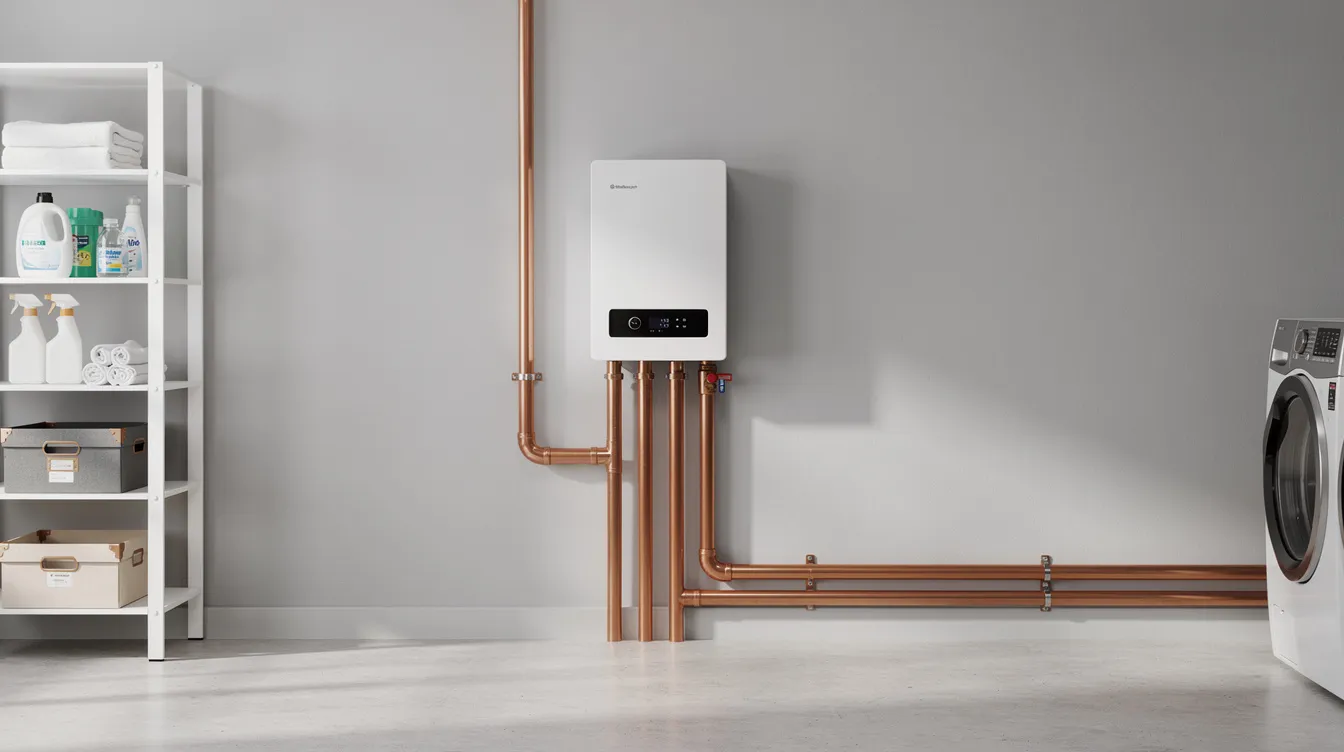
A tankless gas water heater heats water on demand rather than storing it in a tank. When you turn on a hot water faucet, cold water flows through the unit, a gas burner fires based on flow detection, and a heat exchanger rapidly transfers heat to the water before it exits to your fixtures. The result: continuous showers, back-to-back laundry loads, and dishwashing without the familiar cold-water surprise.
Traditional water heaters hold water in a tank – typically 40 to 50 gallons – and keep it heated around the clock, burning energy even when nobody’s home. Tankless water heaters provide hot water on demand and eliminate that standby loss, making them more energy efficient. With proper sizing for demand, tankless units can provide endless hot water.
For Seattle-area homeowners, the benefits are practical:
- Space savings – tankless water heaters save space as they mount on walls, freeing up floor area in garages, basements, and utility closets.
- Energy savings – lower energy usage compared with traditional tank models translates to lower monthly utility bills.
- Longevity – tankless models last longer than traditional tank water heaters, often 15–20 years versus 8–12 for tanks.
When comparing a gas tankless water heater with electric tankless heaters, the key differences center on infrastructure. Gas units require high-BTU burners, adequate gas lines, and venting. Electric models require heavy electrical draws – sometimes requiring full panel upgrades. In the Puget Sound, where winter groundwater enters at 40–50°F and a large temperature rise is needed, gas units typically deliver better flow rates at the required output. For a deeper comparison, see our guide to water heaters: tank vs. tankless installation.
Common reasons people upgrade include replacing a leaking old water heater, wanting lower utility bills, reclaiming space in a cramped utility room, or serving a high-demand household with three or more bathrooms.
Professional Installation vs. DIY (Safety and Code in Washington State)
Installing a gas tankless water heater involves gas lines, combustion air supply, exhaust vent routing, and electrical connections – all of which must meet Washington State and local city codes. Tankless systems may require more complex installation than traditional heaters, and the stakes for getting it wrong are high.
Specific safety risks of DIY installation include:
- Gas leaks from undersized or improperly sealed gas line connections – working with gas lines carries risks of fire and explosion
- Carbon monoxide poisoning from improper exhaust vent installation
- Scalding from an incorrectly installed pressure relief valve
- Fire hazards from poor electrical work or insufficient clearances from combustible materials
Many manufacturers require professional installation to honor warranties. Installation of a tankless water heater usually requires local building permits, and jurisdictions around Bellevue, Kirkland, and Seattle require inspections for gas work. Installation must comply with local and national plumbing codes, including Washington’s adopted UPC and the 2021 International Fuel Gas Code with Seattle amendments.
Ready Rooter Washington provides licensed, insured technicians experienced with tankless water heater installation in both older homes and new construction as part of our top plumbing, drain, and sewer services in Bellevue. You should always select plumbers with experience in this specific type of work. Homeowners can handle preparation – clearing the work area, planning the location – but should leave gas, venting, and final connections to a pro. For help finding the right plumber in Bellevue and the Puget Sound, we’ve put together a separate resource.
Initial Site Visit and Sizing the New Unit
The first appointment is about measurement, not installation. A technician assesses your home’s hot water demand, evaluates existing infrastructure, and recommends the right tankless water heater for your situation.
What gets evaluated:
| Factor | What’s Measured |
|---|---|
| Hot water demand | Number of bathrooms, simultaneous fixture usage, GPM requirements |
| Temperature rise | Incoming water temp (40–50°F in Puget Sound winter) vs. desired output (~120°F) |
| Gas supply | Existing line diameter, run length, meter capacity, total BTU load from all appliances |
| Electrical supply | Panel capacity, available circuits, grounding |
| Venting options | Exterior wall paths, roof penetrations, existing vent chases |
| Proper sizing for a tankless unit depends on household water usage patterns and simultaneous demands. A tankless heater can supply water at a limited flow rate based on demand and temperature rise – if you need two showers and a dishwasher running at once, the unit must handle roughly 5+ GPM at a 70–80°F rise. Tankless water heaters require 90k to 130k BTU/H for typical residential operation, with larger homes sometimes needing higher-capacity models. Larger homes may need multiple tankless units for adequate supply. |
Ready Rooter Washington reviews manufacturer specs and local code requirements to recommend either a condensing or non-condensing model. Several factors – including your home’s layout, climate zone, and existing gas meter – determine which is the right unit for your property.
Upgrading or Verifying the Gas Line
Tankless gas water heaters often need far more BTUs than a standard tank, which means many homes must upgrade the gas line before installation. Gas installations may require gas line upgrades, and this is one of the most common cost factors in a conversion project.
The installer measures existing gas line diameter – often ½-inch in older Bellevue and Seattle homes – then checks the run length, number of fittings, and total BTU load including your furnace, range, and dryer. Gas tankless water heaters need a gas line upgrade to 1 inch (or at minimum ¾-inch) to deliver adequate pressure and volume to the new unit without starving other appliances.
Tankless installation can often involve adjustments to existing infrastructure like gas lines, including:
- Replacing sections of undersized pipe with larger-diameter black iron or CSST
- Adding or relocating shutoff valves
- Installing a sediment trap at the appliance connection per code
All threaded connections on gas lines must use gas-rated thread sealant and be properly supported and routed according to code. Ready Rooter Washington performs a pressure test on the supply line with a manometer before turning on fuel, documenting results for inspectors when permits are required.
Removing the Old Water Heater
Most tankless installations begin with removing an existing tank-style heater before the new unit goes on the wall. Installing a tankless water heater requires shutting off utilities before installation – this is a non-negotiable safety step.
Safe shutdown and removal sequence:
- Turn off natural gas at the shutoff valve upstream of the old unit
- Shut off the cold water supply line
- Disconnect power if the old unit has an electrical supply connection
- Attach a hose to the drain valve and drain the tank to a floor drain or outside – handle hot water and sediment carefully
- Disconnect water lines, gas line connections, venting, and any expansion tank or pressure relief piping
- Haul the old water heater out
Ready Rooter Washington coordinates proper disposal or recycling of the old unit per local regulations, keeping the job site clean so the next phase – mounting and connecting the new system – can proceed smoothly, and we can also provide comprehensive plumbing, drain, and sewer services in Bellevue if additional issues are discovered during the visit.
Mounting the New Tankless Water Heater
The new unit is typically wall-mounted near existing plumbing, gas line, and vent routes to minimize rerouting work. The installer checks wall structure – studs, concrete, or masonry – and uses manufacturer-approved mounting hardware.
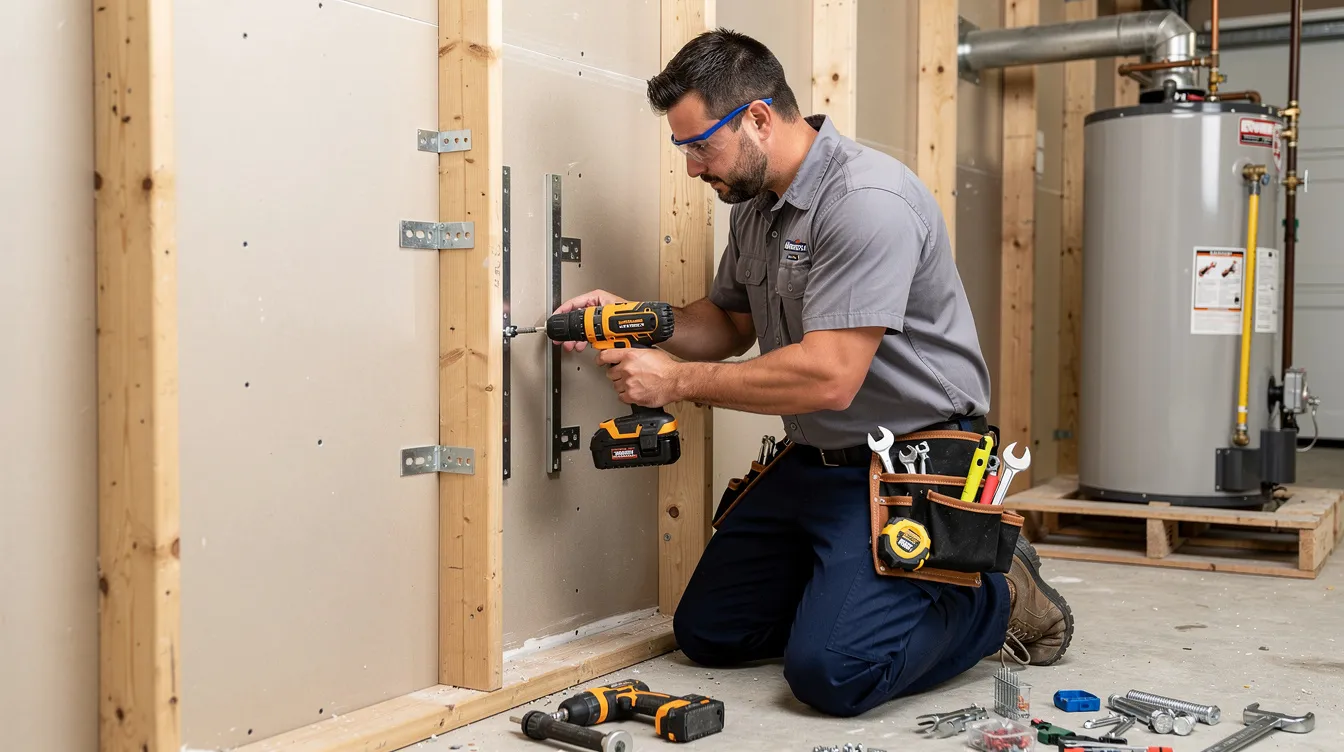
The plumber follows the brand’s template or bracket system to position the heater level, at the correct height for service access and future maintenance tasks like sediment flushing. Clearances for combustion air, service panels, and walkways are maintained per both the owner’s manual and local codes.
In smaller Bellevue-area homes and townhomes, the compact footprint of a tankless heater allows mounting in utility closets, garages, or basements while still meeting code-required access. If relocation from the old unit’s location is necessary, any wall penetrations for venting or water pipes are flashed and sealed to prevent moisture intrusion – critical in Seattle’s rainy climate.
Installing New Water Lines and Valves
With the unit mounted, the installer connects it to your home’s plumbing using new water lines and isolation valves. The water supply for a tankless heater needs to be correctly connected to prevent operational issues.
Routing involves running new water lines – copper, PEX, or other code-approved materials – from the home’s cold and hot manifolds to the tankless inlet and outlet. Installers add hot and cold shutoff valves and a service valve kit to allow future flushing, descaling, and purging without shutting off the entire house.
In some Seattle-area homes, a pressure reducing valve or expansion tank may be required to protect the system and meet local plumbing code – particularly in closed plumbing systems with backflow devices at the meter.
Ready Rooter Washington checks for leaks at all joints and verifies that flow rates and pressures match the manufacturer’s recommendations before the unit is fired for the first time. For more on our water heater services, including tank and tankless options, visit our services page.
Pressure Relief Valve and Safety Components
Every tankless water heater needs a pressure relief valve to safely release excess pressure and temperature in abnormal conditions. Tankless water heaters require a pressure relief valve rated for 150 psi, with a temperature sensing element positioned per Washington code (WAC 296-150C) to monitor the hottest water.
The installer mounts the valve in the location specified by the manufacturer and routes a discharge line to an approved drain or termination point. This line must:
- Be full-size (matching the valve outlet)
- Slope downward for gravity drainage
- Terminate at least 6 inches above the floor or at an approved exterior location
- Use materials rated for hot water and code compliance
The system may also include purge valves or flush ports to purge air and sediment from the unit during startup and future maintenance. All safety components are tested during commissioning. Tampering with or plugging a pressure relief valve is extremely dangerous and violates code.
Exhaust Venting and Combustion Air
Modern gas tankless water heaters use direct vent systems to safely carry combustion gases outdoors and draw in fresh combustion air. Vent installation for gas models must adhere to manufacturer specifications to ensure safety, and tankless heaters need proper venting for safe operation.
For condensing units (90%+ efficiency), the cooler exhaust allows use of PVC, CPVC, or polypropylene exhaust vent pipe. Non-condensing models produce hotter flue gases and require stainless steel or Category III/IV venting. Either way, they cannot simply tie into an existing masonry chimney – the temperature and condensation profiles are incompatible.
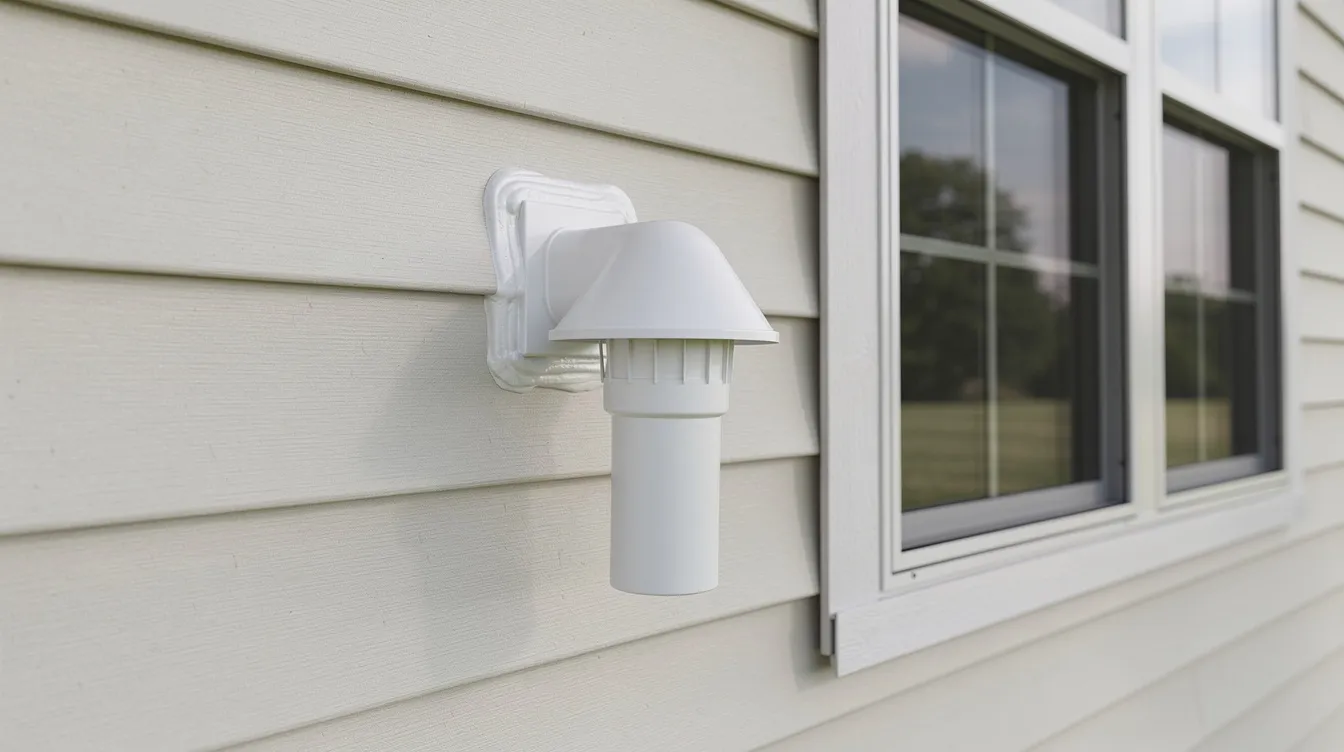
Venting requirements include:
- Proper clearances from windows, doors, soffit vents, and neighboring structures
- Factory-specified termination fittings
- Sealed wall or roof penetrations waterproofed against Pacific Northwest rain
- Adequate combustion air provision per Seattle Residential Code Section G2407
Ready Rooter Washington seals all penetrations against moisture intrusion, protecting siding, sheathing, and interior finishes – a detail that matters enormously in a region averaging 37 inches of rain annually, and our team can also handle trenchless sewer line repair in Bellevue when underground sewer piping is part of a larger plumbing project.
Electrical Connections and Startup
Even gas-fired tankless units need electrical connections for the control board, electronic ignition, and – in condensing models – a condensate pump. Some systems also power a recirculation system. Proper electrical connections are essential for both gas and electric tankless models to operate safely.
The installer verifies that a dedicated electrical circuit, breaker, and receptacle (often 120V) meet the manufacturer’s requirements and local electrical code (WAC 296-46B, adopting the NEC). The unit’s power cord or hard-wired leads are connected with proper strain relief and grounding.
Startup sequence:
- Turn on the water supply and open faucets to fill the heat exchanger
- Turn on gas and purge air from the gas line
- Test for leaks using approved leak-detection methods
- Power on the unit and run onboard diagnostics
- Set temperature (typically ~120°F) and test recirculation if equipped
Ready Rooter Washington programs the control panel and demonstrates basic operation to the homeowner before leaving the job site, and can advise on preventative maintenance such as professional drain cleaning and clearing in Bellevue to keep your overall plumbing system running smoothly.
Purging Air, Testing, and Final Walkthrough
The final phase is about confirming everything works and educating you on living with your new system. The installer opens multiple hot water faucets throughout the house to purge air from new water lines and the heat exchanger until steady hot water flows with no sputtering.
Using onboard diagnostics, thermometers, and pressure gauges, the technician confirms outlet temperature, gas pressure, and performance under real usage conditions – for example, running one shower, then two fixtures simultaneously, to measure actual output.
The walkthrough covers maintenance essentials:
- Periodic flushing and descaling (especially important given sediment and hard water concerns in the region)
- Cleaning the inlet water filter screen
- Checking the exhaust vent annually
- Monitoring the pressure relief valve discharge line
Ready Rooter Washington provides all required paperwork – permits closed out, installation details for warranty registration, and contact information for future support.
Costs, Timelines, and When to Call Ready Rooter Washington
Costs and timelines vary by home, but here’s what to expect in the Bellevue area. The upfront cost of a tankless water heater is typically higher than a traditional tank. Tankless water heater installation costs vary based on unit type, and gas installations typically cost more than electric models. Costs increase when converting from tank to tankless systems.
| Cost Factor | Typical Range (Bellevue Area) |
|---|---|
| Fully installed system | $3,100–$6,750 |
| Complex conversions (gas line reroute, long vent runs) | $4,500–$7,000+ |
| Labor rates | $135–$260/hour |
| Timeline (standard install) | 4–8 hours |
| Complex projects | 1–2 full days |
| Main cost drivers include the choice of model, need for new gas line or gas meter upgrades, length and complexity of exhaust venting, electrical work, and difficulty of removal of the old unit. |
Call or schedule online for a free estimate with Ready Rooter Washington or contact our Bellevue drain and sewer team for other urgent plumbing issues. We’re available 24/7 for emergency replacements when a tank has failed or is leaking. We handle permits, inspections, and coordination with utilities – a complete, turnkey tankless water heater installation experience. For questions about plumber pricing in the area, we’ve published a detailed breakdown.
Frequently Asked Questions
How long does a tankless gas water heater usually last in the Seattle area?
Most quality gas tankless water heaters are designed to last 15–20 years when properly installed and maintained – often double the lifespan of a traditional tank in this climate. Local water quality, regular flushing to remove mineral buildup, and prompt attention to error codes all influence actual lifespan. We recommend scheduling annual or biannual maintenance with Ready Rooter Washington to help extend the life of your unit. Regular inspections of pipe joints and venting are also advisable for maintaining tankless systems over the long term.
Can I reuse my existing gas line and vent for the new tankless unit?
Sometimes – but often not. Existing gas lines in older homes are frequently undersized for the higher BTU input of a tankless model, so an on-site evaluation is required before reuse. Older metal vents and masonry chimneys are usually not compatible with modern direct-vent tankless appliances, which need specific exhaust vent materials and configurations. A licensed technician should inspect and test existing gas lines and vent routes before you assume they can carry over to the right tankless water heater for your home.
Will switching to a tankless heater give me instant hot water at every tap?
A gas tankless water heater produces hot water on demand, but a tankless system may not deliver hot water immediately due to wait time for water to travel through pipes to distant fixtures. The unit itself heats water almost instantly – the delay comes from the distance between the heater and the faucet. Recirculation pumps or dedicated recirculation lines can reduce that wait in larger homes but require additional installation work. During your estimate, Ready Rooter Washington can evaluate whether a recirculation fix would help in your specific house.
Do I need to upgrade my electrical panel for a gas tankless water heater?
Gas models generally draw much less electrical power than whole-house electric units and often run on a standard 120V circuit. Tankless heaters can require electrical upgrades if installed as electric models, but for gas, it’s rarely a major issue. That said, in some older homes with very limited electrical capacity, a dedicated circuit or small panel upgrade may still be required for code compliance and safety. Have the installer or an electrician verify panel capacity during the planning phase to avoid surprises on installation day.
How often should I flush and maintain my tankless water heater?
Many manufacturers recommend flushing the heat exchanger annually in areas with moderate water hardness, and potentially every six months in harder water conditions. Tankless water heaters may require annual maintenance to prevent mineral buildup that degrades efficiency and shortens the life of internal components. During a maintenance visit, a technician can also check the pressure relief valve, exhaust vent, gas line connections, and inlet screen. Homeowners in Bellevue and surrounding cities can schedule regular maintenance with Ready Rooter Plumbing and Drain to keep their system running at peak efficiency for years to come.
Share this post:


