

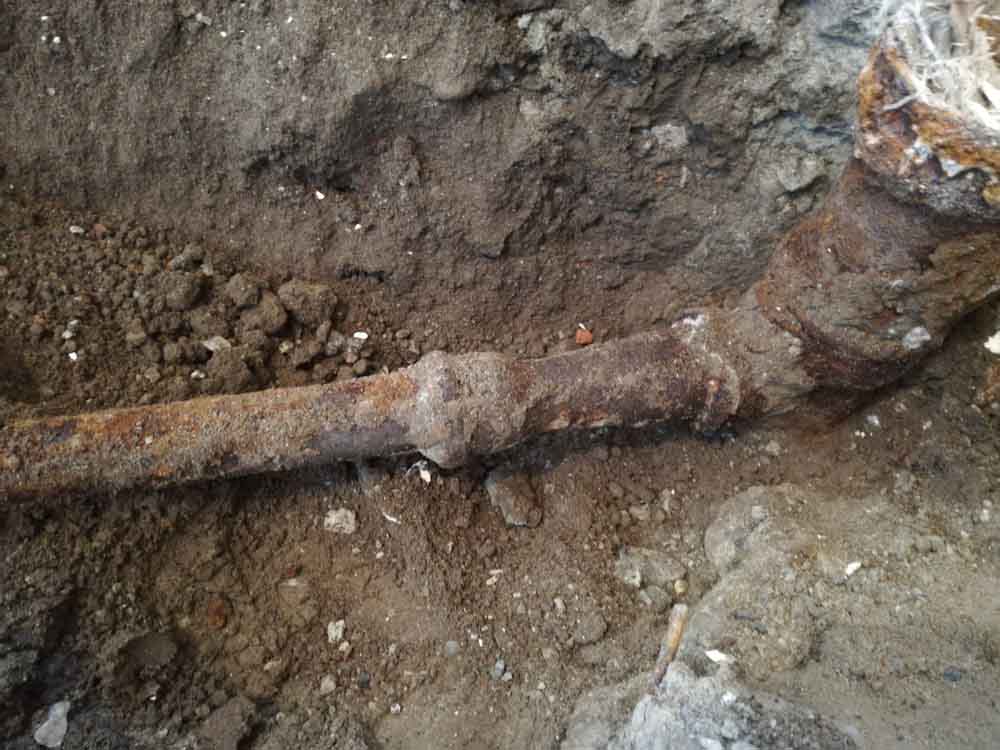
Nobody plans for a sewer line. It sits four to six feet under your yard doing its job for decades, and then one Saturday the downstairs toilet gurgles when the washing machine drains and suddenly you’re getting an education you didn’t ask for.
Here’s what that education actually covers — the signs worth acting on, how the problem gets diagnosed, what your repair options really are, and the Seattle-specific rules that catch homeowners off guard. Read this before you call anyone for sewer repair in Seattle, WA, and you’ll know whether the quote in front of you makes sense.
Warning Signs Your Sewer Line Needs Attention
Sewer problems announce themselves early. The trouble is that the early signals look like small, unrelated annoyances, so they get ignored until they aren’t small anymore.
Early signs — schedule an inspection:
- One drain running slower than it used to, then a second
- A faint sewage smell in the yard, basement, or near a floor drain
- Toilets that gurgle or bubble when you run the washer or empty a tub
- Drains that clear after snaking but clog again within a few months
- Grass over the sewer line that’s suddenly greener or thicker than the rest of the lawn
Urgent signs — call now:
- Sewage backing up into a tub, shower, or floor drain
- Multiple fixtures backing up at the same time
- Standing water or a soggy, sunken patch in the yard along the line’s path
- Sewage odor inside the house that doesn’t clear
The pattern that matters most is multiple fixtures at once. A single slow sink is usually a local clog under that fixture. When several fixtures act up together, the problem is downstream in the main — and that’s a sewer and drain line issue, not a plunger problem.
The other pattern worth flagging: repeat clogs in the same spot. If snaking fixes it and it comes back, the snake is punching a hole through an obstruction rather than removing the cause. Recurring clogs almost always have a structural or root-related reason behind them.
What’s Actually Causing It
Knowing the cause changes the repair. These are what we find under Seattle homes, roughly in order of frequency.
Tree roots. Doug firs, big-leaf maples, and cedars send roots toward the moisture and nutrients leaking from any small crack or loose joint. Once they’re in, they fan out and catch everything that passes. Root intrusion is the single most common cause of sewer failure in the Puget Sound region, and it’s why root management matters even after a repair.
Age and material. Homes in Ballard, Wallingford, Queen Anne, Beacon Hill, and Rainier Valley frequently still have their original lines: vitrified clay, cast iron, or Orangeburg. Clay cracks and separates at the joints. Cast iron corrodes and scales from the inside until the wall gives out, which is why replacing cast iron comes up so often on older properties. Orangeburg — tar-impregnated fiber pipe installed roughly 1945 to 1972 — deforms into an oval and collapses. If your house predates 1975 and the line has never been replaced, assume it’s near the end.
Ground movement. Seattle has slopes, fill, and a very wet season. Saturated soil shifts, and rigid pipe answers with a crack or an offset joint. Bellies — low spots where waste pools instead of flowing — usually start this way.
Grease and what gets flushed. Cooking grease cools and coats the pipe wall. “Flushable” wipes don’t break down. Together they build the blockage that roots then anchor to.
Bad prior work. Improper slope, unsupported bedding, and DIY connections cause failures that look like age but aren’t. A camera tells the difference immediately.
If you’re unsure which pipe you’re even dealing with, it helps to know how a water line, a drain pipe, and a sewer line differ — the distinction changes who’s responsible and what the fix costs.
How the Problem Gets Diagnosed
Any contractor who quotes a sewer replacement without putting a camera in the line is guessing, and you’re paying for the guess.
Video camera inspection is the standard. A camera on a flexible rod travels the length of the line and shows you exactly what’s there: the crack, the root mass, the offset, the belly, the collapse. A transmitting sonde in the camera head lets the technician mark the depth and location on the surface, which is what determines whether trenchless is even possible. Ask to watch the footage — a good tech will narrate it. Our camera inspection service covers this, and this walkthrough of a modern sewer camera inspection shows what the process looks like start to finish.
Hydro jetting before the camera. Sometimes the line is too fouled to see anything. Jetting scours the walls clean so the camera can show actual pipe condition rather than sludge — and it doubles as the fix when the problem turns out to be buildup rather than damage.
Smoke and dye testing show up in specific situations. Smoke testing pushes non-toxic smoke through the line to reveal cracks, bad connections, and stormwater cross-connections — common in inflow-and-infiltration investigations. Dye testing traces where water from a specific fixture or downspout actually goes. Neither replaces a camera on a residential repair; both answer questions a camera can’t.
Locating and depth. Before any work, the crew marks the line’s path and calls in utility locates. Depth matters: a line eight feet down under a driveway changes the math on every repair option below.
Your Repair Options, Compared
| Method | Best for | Disruption | Typical lifespan |
|---|---|---|---|
| Hydro jetting / cleaning | Grease, sludge, soft root buildup in sound pipe | None | Maintenance, not a repair |
| Spot repair | A single crack, offset, or break in an otherwise good line | One small dig | 50+ years for that section |
| CIPP lining | Cracked, corroded, or root-infiltrated pipe that’s still structurally intact | Little to none | 50+ years |
| Pipe bursting | Collapsed, crushed, badly offset, or undersized pipe | Two access pits | 50–100 years |
| Traditional excavation | Severe collapse, no pull path, complex connections, some deep lines | Full trench | 50+ years |
Trenchless methods have become the default for a straightforward reason: on a Seattle lot, restoring what a trench destroys can cost as much as the plumbing. Driveways, patios, retaining walls, and thirty-year-old landscaping are expensive to put back. Pipe bursting needs only an entry and exit pit; lining often works through an existing cleanout with no digging at all. Both leave a jointless, corrosion-proof pipe that lasts 50 years or more.
Trenchless isn’t universal, though. Fully collapsed pipe with no path to pull through, severe bellies that need re-grading, and some shared or deep connections still require excavation. An honest contractor tells you that after the camera run — not after starting the job.
Who Pays and Who Permits: The Seattle Side Sewer Rule
This surprises people, so it’s worth stating plainly: in Seattle, the property owner owns and maintains the side sewer — the line running from your house to the city main. That responsibility usually extends under the sidewalk and into the street, all the way to the connection. The city maintains the main; you maintain everything before it.
Practical consequences:
- Repair work in the right-of-way requires a side sewer permit and, often, a street-use permit. A licensed side sewer contractor pulls these. You shouldn’t be doing it yourself.
- Unpermitted sewer work surfaces during resale and inspection. Skipping the permit to save a few hundred dollars can cost far more at closing.
- Check your homeowner’s policy for a service line endorsement. Standard policies typically exclude the buried line; many carriers sell an add-on that covers it for a modest annual amount.
- If you’re buying an older Seattle home, a pre-purchase sewer scope is one of the cheapest inspections you can buy relative to what it can save you.
What It Costs to Wait
Sewer problems don’t stabilize. A hairline crack admits roots; roots widen the crack; the widened crack lets soil in; soil creates a void; the void lets the pipe drop and offset. Each stage narrows your options and raises the cost.
The practical difference: a root intrusion caught on camera might be handled with jetting and a spot repair. The same line ignored for two more winters can turn into a full replacement plus water damage remediation inside the house. The pipe didn’t get more expensive to fix — the delay did.
How to Choose a Sewer Contractor
Sewer work is one of the few home repairs where you can’t inspect the finished product yourself. That makes who you hire the entire decision.
Ask for:
- License, bond, and insurance — verify the contractor’s registration with Washington L&I, not just a logo on a truck
- Camera footage before and after, provided to you, not just described
- A written scope that names the method, the footage, the materials, and what restoration is included
- Permit handling in writing — who pulls it, who schedules inspection
- The warranty terms — material only, or material and labor, and for how long
- Local references on similar lines, ideally in your neighborhood
Two red flags: a quote given without an inspection, and pressure to decide the same day. Real sewer problems are urgent; real contractors still let you read the estimate. You can see who’s on our crew and what Seattle-area customers say about the work before you call.
After the Repair: Keeping It That Way
A new line is low-maintenance, not no-maintenance.
- Camera the line every two to three years if you have mature trees over it, every five if you don’t
- Use hydro jetting rather than caustic drain chemicals
- Keep the cleanout accessible — don’t bury it under a new patio or bark bed
- Grease goes in the trash, wipes go in the trash, regardless of the packaging
- Consider a maintenance plan if you’d rather not track the schedule yourself
Frequently Asked Questions
How long does sewer line repair take? Most residential trenchless repairs finish in a single day. Traditional excavation runs two to five days depending on depth, length, and restoration. Permitting can add a day or two before work starts.
Is a sewer line repair covered by homeowners insurance? Standard policies generally exclude damage from wear, age, and root intrusion on the buried line. Many insurers offer a service line endorsement that does cover it. Sudden interior water damage from a backup may be covered separately — check your policy or ask your agent directly.
Can I keep snaking it instead of repairing it? You can, and some homeowners do for years. Snaking clears the symptom; it doesn’t repair a crack, offset, or belly, and roots return on a predictable cycle. It’s a reasonable stopgap, not a fix.
Do I need a permit to repair my sewer line in Seattle? Yes. Side sewer repair and replacement require a permit, and work in the right-of-way typically requires additional street-use approval. Your contractor handles this.
How do I know if it’s the sewer line or just a clogged drain? One slow fixture points to a local clog. Several fixtures backing up together, gurgling toilets, or a floor drain overflowing point to the main line. A camera inspection settles it in under an hour.
Get Eyes on the Line Before You Spend a Dollar
You shouldn’t have to take anyone’s word for what’s under your yard — including ours. We camera every line first, show you the footage, and explain why we’re recommending lining, bursting, or a spot repair instead of the most expensive option on the menu.
We handle sewer repair across Seattle and the surrounding King, Pierce, and Snohomish County communities, with emergency service when a backup can’t wait. Talk to us today and let’s find out what you’re actually dealing with.
Share this post:


